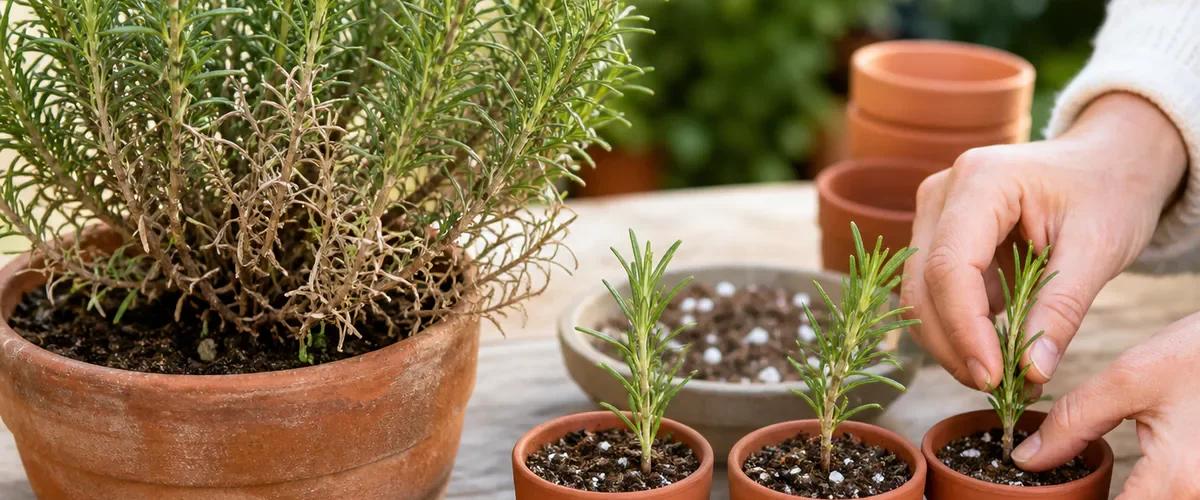
Half the rosemary is brown, the pot stays wet for days, and every new needle seems ready to fall. It is tempting to throw the whole plant away. Before you do, look closely at the youngest stem tips. A few flexible green shoots can become a living backup while you repair the parent plant.
To save a dying rosemary plant, work on two paths at once: correct the cause of decline and root healthy cuttings before those final shoots are lost. Cuttings cannot cure the original roots, but they can preserve the plant and give you a cleaner second chance.
Decide What Is Still Alive
Bend a small stem gently. Dead stems are brittle and snap, while living growth has some flexibility. Scratch a tiny area of bark with a clean fingernail; green tissue underneath is alive. Check several branches because one side may survive after another has died.
Look at the soil and roots too. Bone-dry mix pulling from the pot suggests drought. Wet, sour-smelling mix and dark soft roots suggest rot. Fine webbing, pale speckles, or fixed bumps may indicate pests. A correct diagnosis matters more than any tonic.
Take Insurance Cuttings First
Choose flexible green tips without flowers, disease spots, or insects. In the morning, cut several stems about four to six inches long with disinfected scissors. More than one cutting improves the chance that at least one roots.
Remove leaves from the lower half, leaving a small tuft of foliage at the top. Do not strip the bark. If the tips are very soft and wilted, place them in a clean bag with a barely damp paper towel while you prepare the pots, then plant them promptly.
Root the Cuttings in an Airy Mix
Fill small pots with a fresh, fast-draining propagation mix. Water the mix and let it drain before planting. Make a narrow hole with a pencil so the stem slides in without scraping, then firm the mix gently around it.
Rooting hormone is optional, not magical. If you use one, follow its label and tap away excess powder. Do not place several cuttings in a large wet pot, where the center can remain soggy.
Set the pots in bright indirect light. Keep the mix lightly moist but never saturated. A loose clear cover can slow moisture loss, but it must have ventilation and should not touch the foliage. Remove it regularly for fresh air and stop using it if mold appears.
Know When Roots Have Formed
Rosemary cuttings may need several weeks. Fresh upright growth is encouraging, but it does not prove roots are present. After some time, give the stem a very gentle tug. Resistance suggests roots are holding the mix. Do not pull repeatedly, because new roots are delicate.
Once a cutting is growing, gradually give it more sun and allow slightly longer drying between waterings. Move it into a larger pot only after roots have filled the small container. A tiny plant in a huge pot is easy to overwater.
Repair the Parent Plant
If the root ball is waterlogged, remove the plant from the pot and trim soft dead roots with clean tools. Repot in a gritty herb mix inside a container with an open drainage hole. Choose a pot close to the size of the remaining healthy root system.
If the plant is simply dry, soak the root ball slowly until it is evenly moist and draining. Do not leave it standing in water afterward. A badly dried peat-based mix may repel water at first, so apply water in stages rather than flooding the surface once.
Move the rosemary into strong light, introducing direct sun gradually. Water deeply only when the upper soil has dried. Pause fertilizer until new growth shows that roots are functioning again.
Prune Without Removing Its Last Strength
Cut clearly dead tips back to living green tissue. Avoid shearing the entire plant or cutting far into old leafless wood. Rosemary may struggle to regrow from bare woody stems. Leave every healthy branch you can while the roots recover.
Disinfect blades between diseased plants. Bag pest-filled or rotten material rather than using it for indoor propagation. Healthy unsprayed trimmings can go into a managed compost pile.
Mistakes That Ruin the Rescue
Do not feed a stressed rosemary with sugar, yeast, coffee, or strong fertilizer. These additions cannot rebuild roots. Avoid rooting cuttings in a glass of old cloudy water for weeks; rosemary usually establishes more smoothly in an airy solid mix.
Another mistake is keeping cuttings under a sealed cover in direct sun. Temperatures can rise quickly and cook tender stems. Bright shade, gentle moisture, and airflow are safer.
What Success Looks Like
The parent may recover slowly, one green tip at a time. Some severely damaged plants will not survive even with perfect care. That is why taking cuttings early matters: it separates the future plant from the failing roots.
The move that can save a dying rosemary plant is not a secret liquid. It is a calm rescue plan with a backup. Preserve healthy tips, rebuild drainage and light, and let new roots do the work the old roots no longer can.


