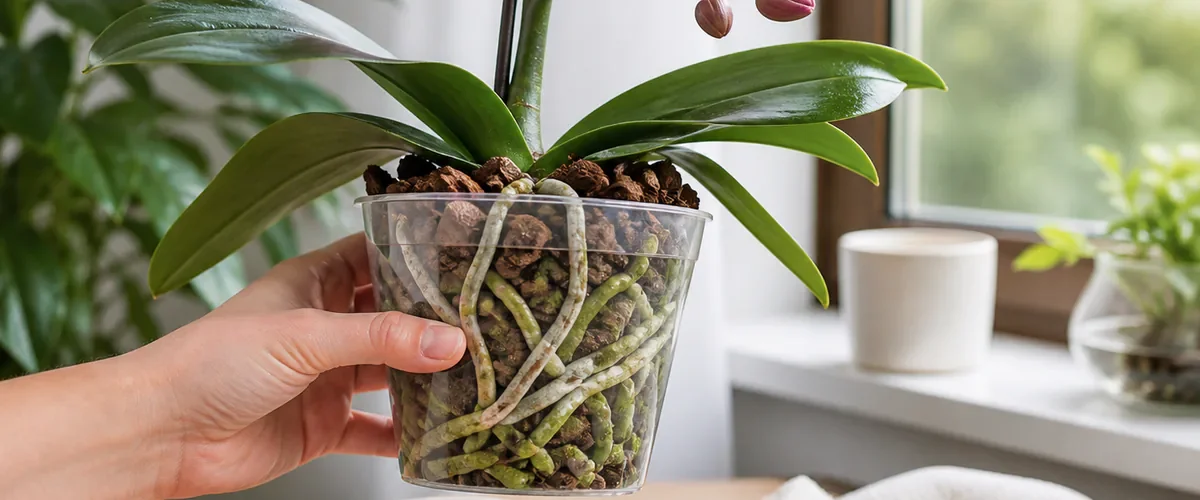
Every morning, the orchid owner reached for the spray bottle. The leaves shone, the bark stayed dark, and the plant looked carefully tended. Months later, no flower spike appeared. The daily habit meant to help had kept the roots wet and allowed water to collect where the leaves joined.
If you want to make an orchid bloom again, replace automatic watering with a one-minute morning check. Observe light, root color, moisture, new growth, and pests before doing anything. Most mornings, the best care may be leaving the plant alone.
Start With the Roots
Common moth orchids are often sold in clear inner pots. Look through the sides before lifting the watering can. Firm roots may appear green when moist and silvery as they dry. Brown, hollow, or mushy roots point to damage, while bright green root tips show active growth.
Lift the pot. Bark becomes lighter as it dries, so the weight helps you judge moisture below the surface. If the pot still feels heavy and roots are green, wait. Watering because it is Tuesday or because you are already at the sink ignores what the plant is telling you.
Check the Crown Before the Sun Warms Up
The crown is the central point where new leaves emerge. It should stay clean and dry. Water trapped there can encourage rot, especially in cool rooms with little airflow. If a splash lands in the crown, touch the corner of a paper towel to the water so it is drawn out gently.
Do not mist the crown or flowers every morning. Misting barely raises room humidity and may leave petals spotted. If your home is very dry, a room humidifier used safely or a group of plants can create more stable conditions.
Notice the Morning Light
An orchid can stay green in light too weak for flowering. During the morning check, notice whether the leaves receive bright, filtered light or sit in a dim shadow. Move the plant closer to a suitable window gradually, protecting it from harsh midday sun.
Leaf color gives clues but not a perfect measurement. Very dark leaves can accompany low light, while yellow-green or scorched patches may signal too much direct sun. A mature moth orchid often blooms best when it receives consistent bright indirect light and a gentle difference between daytime and nighttime temperatures.
Look for New Growth, Not Instant Flowers
A new leaf or root is good news. Orchids commonly grow leaves and roots before forming the next spike. That quiet stage stores energy, even if the windowsill does not look dramatic. Mark the date of new growth or take a monthly photo instead of changing treatments every few days.
Learn the difference between a root and a flower spike. New roots are often rounded and glossy at the tip. A moth-orchid spike usually looks flatter with a mitten-like tip and small nodes as it lengthens. Do not bend or stake it until it has enough length to move safely.
Water Only When the Check Says Yes
When roots and bark are ready, carry the plant to the sink. Use room-temperature water and soak the bark thoroughly, then allow the pot to drain. Keep water out of the crown and never leave the inner pot standing in a decorative container full of runoff.
The interval may be shorter in warm bright weather and longer during cool dark weeks. Small bark dries faster than large chunks, while compacted old mix stays wet. Replace broken-down bark when it begins to hold moisture too long.
Feed Lightly and Completely
Use a complete fertilizer made for orchids or suitable houseplants, following its label. Frequent weak feeding may be directed by some products, while others require a different schedule. Do not guess or double the rate to force a spike.
Flush the pot with plain water periodically to reduce fertilizer-salt buildup. White crust on bark, pot edges, or roots suggests that minerals are accumulating. A stressed root system cannot use extra food effectively.
Morning Warning Signs
Check leaf undersides and flower stems for scale, mealybugs, sticky residue, or fine webbing. Isolate a suspicious plant before pests reach the rest of the collection. Treat only after identifying the problem and choose a product labeled for the plant and pest.
Wrinkled leaves can mean the roots are not delivering enough water, but the cause may be either drought or rot. Inspect moisture and roots before pouring. Yellowing of the oldest bottom leaf can be normal, while several rapidly yellowing leaves call for a closer look.
The Habits That Quietly Block Blooms
Daily watering, ice cubes, strong kitchen remedies, constant relocation, and heavy fertilizer all add stress. Cutting every old spike immediately is not always necessary, but leaving a brown dead spike serves no purpose. Use clean tools and follow guidance for your orchid type.
No morning ritual can make an orchid flower all year. Blooms are part of a growth cycle, and rest is normal. The useful ritual is observation: roots, moisture, light, crown, and new growth.
To make an orchid bloom again, create steady conditions and let the plant set the pace. That one quiet minute each morning prevents overcare, catches trouble early, and protects the energy your orchid needs for its next flower spike.


