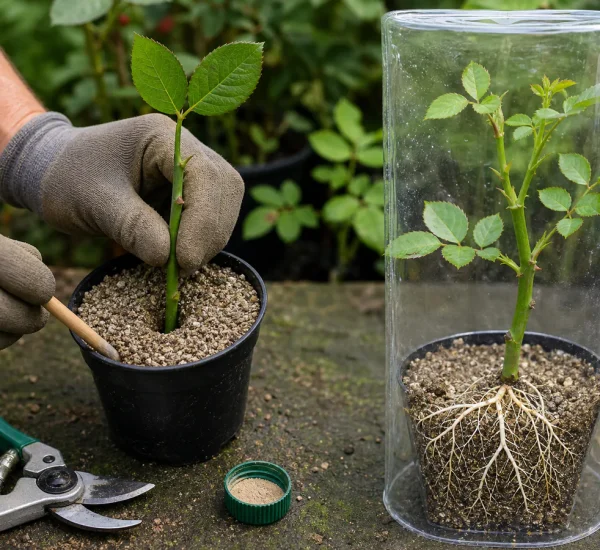
A bay tree on a balcony begins with a surprisingly small stem and a long quiet wait. Unlike mint, culinary bay does not rush to make roots. The cutting may remain green for months, and only some stems succeed.
Patience works when it is paired with clean technique: identify Laurus nobilis, choose semi-mature growth, place several cuttings in sterile draining mix, and hold humidity without waterlogging. The result is not “eternal,” but a well-kept container bay can become a long-lived kitchen plant.
Start with the right kind of bay
Culinary bay is Laurus nobilis. Cherry laurel and other plants called laurel are not safe cooking substitutes. Leaves from an unidentified hedge should never enter food.
Obtain the parent plant from a reliable herb nursery, keep its label, and confirm it was grown with products suitable for edible use. Label every cutting tray.
Find a firm green stem
Semi-ripe cuttings are commonly taken when current-season growth begins to firm. In many climates that happens in late summer, but regional conditions vary.
Select nonflowering tips from a healthy plant. Avoid stems with sticky leaves, scale bumps, webbing, black spots, or wilt. Cut several four-to-six-inch pieces below a leaf node using clean sharp pruners.
Reduce leaves and moisture loss
Remove leaves from the lower half of each stem. Keep a small cluster at the top. If remaining leaves are large, cleanly shorten them to reduce the surface losing water.
Do not strip the stem or crush its base. A small heel cutting may be used under regional guidance, but a ragged wound rots easily.
Prepare a sterile, airy pot
Use a clean container with open drainage holes. Fill it with fresh propagation mix made for woody cuttings. Do not use heavy soil from the garden.
Make planting holes first. Insert the bare lower stem with at least one node beneath the surface, then press the mix lightly around it. Space leaves so they do not touch.
Use rooting hormone only as labeled
A suitable rooting hormone may improve the chance of success. Choose one approved for the plant and intended use. Pour a small amount into a separate dish rather than dipping stems into the main container.
Tap off excess and discard the used portion. Too much hormone can damage tissue, and none can compensate for soaked mix or a diseased cutting.
Balance humidity with fresh air
Water the pot once and drain it. Place a clear bag over supports so plastic does not touch leaves, or use a propagator with vents. Open it regularly for air and remove condensation that drips heavily.
Set the pot in bright indirect light. Direct sun through plastic creates dangerous heat. Keep the medium slightly moist by checking it, not by misting on a schedule.
Recognize slow progress
Bay cuttings may need months. Leaves that stay green are encouraging, but stored moisture can keep a stem alive without roots. Do not tug repeatedly.
Later, new growth and gentle resistance may suggest rooting. A stem that blackens, collapses, smells bad, or drops every leaf should be removed. Clean tools after touching failed tissue.
Move one rooted cutting at a time
When roots hold a small plug of mix, transplant into a slightly larger draining pot. Use quality container soil and keep the original stem depth. Water to settle and let excess escape.
Reduce humidity gradually, then introduce direct sun over several days. Sudden full sun can scorch soft leaves.
Build a healthy balcony tree
Place established bay in sun or light shade according to the climate. Shelter it from severe wind. Water deeply when the surface begins to dry and never leave the container standing in runoff.
Protect container roots from temperatures beyond the cultivar’s tolerance. A pot freezes faster than ground soil. Move it to a suitable sheltered outdoor space or insulate it according to local advice.
Shape, repot, and feed gently
Pinch the tips to encourage branching once the cutting is clearly growing. Prune lightly for shape, removing dead or crossing twigs. Repot one size larger when roots become crowded.
Use a balanced container fertilizer at the label’s low recommended rate during active growth. Excess feed makes soft shoots and increases pest problems.
Harvest leaves safely
Take a few mature leaves from a vigorous identified plant. Dry them in a clean ventilated place or use them fresh. Whole bay leaves remain stiff after cooking and can be a choking or injury hazard, so remove them before serving.
Check for scale and bay sucker before harvest. Treat only with products labeled for edible bay and follow the waiting period.
One cutting, years of fragrance
The cutting does not promise instant abundance. Its value lies in slow, manageable growth that suits a large balcony container.
Start several stems, celebrate the one that roots, and increase sun and harvest gradually. Patient care can turn that quiet cutting into a fragrant bay tree that earns its place beside the kitchen door.