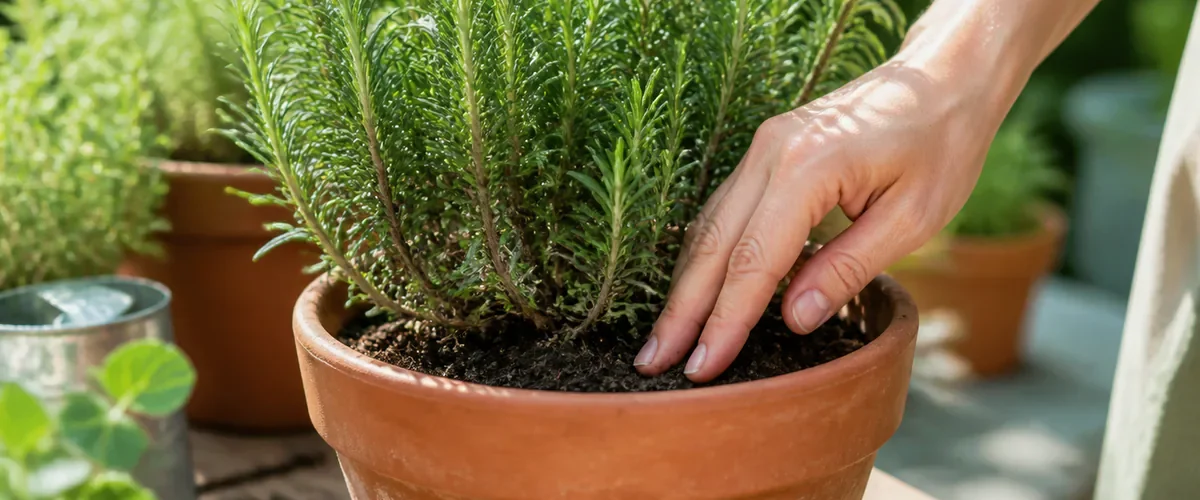
The rosemary receives water every few days, yet its needles keep turning brown. The natural reaction is to pour in a little more. A week later, entire stems feel brittle. What looks like thirst may actually be the final stage of roots sitting without enough air.
If you wonder why rosemary keeps drying out, begin below the soil rather than at the branch tips. Overwatering, underwatering, poor drainage, weak light, cold damage, and root disease can all produce dry-looking foliage. The right rescue depends on finding which stress came first.
Rosemary Is Built for Lean, Airy Ground
Rosemary comes from sunny Mediterranean conditions. Its narrow leaves help limit water loss, while its roots prefer soil that drains quickly. In a heavy indoor mix or a pot with no outlet, water fills air spaces around the roots. Damaged roots can no longer supply the leaves, so the plant browns even while the soil is wet.
A pot that stays heavy for many days, smells sour, or grows green algae on the surface is holding too much moisture. A plant that wilts in bone-dry mix and becomes lighter than expected may truly be thirsty. Touching the soil before watering separates these two problems.
Check the Roots Before Adding Anything
Slide the root ball out gently. Healthy rosemary roots are firm and pale to tan. Rotten roots may be dark, soft, and easy to pull apart. If most roots are healthy, loosen compacted mix and repot in a container with a clear drainage hole.
Use a gritty, fast-draining potting mix suitable for Mediterranean herbs. A terracotta pot can help excess moisture escape through its sides, though it may need watering more often in hot weather. Choose a pot only slightly larger than the root ball; a huge volume of wet soil dries slowly.
Trim dead, mushy roots with clean scissors. Do not fertilize a freshly stressed plant. Give roots time to recover in bright conditions first.
Change the Way You Water
Water deeply enough that liquid runs from the drainage hole, then empty the saucer. Wait until the upper part of the mix dries before watering again. The exact number of days changes with weather, pot size, plant size, airflow, and season.
Small daily sips keep the surface damp while leaving parts of the root ball dry. They also encourage shallow roots. One complete watering followed by a real drying period better matches rosemary’s needs.
Give Rosemary the Light It Expects
Rosemary grows best with strong light and several hours of sun. Indoors, place it at your brightest suitable window and rotate the pot regularly. A weak, stretched plant in a dim room uses water slowly, increasing the chance that soil remains wet.
Move plants into direct outdoor sun gradually. Leaves grown behind glass can scorch when suddenly placed in intense midday light. Start with gentle morning sun and increase exposure over a week or two.
Prune Brown Growth Carefully
Scratch a tiny patch of bark on a questionable stem. Green tissue underneath means it is still alive. Cut dead tips back to healthy green growth with disinfected pruners. Avoid removing all foliage or cutting deeply into old bare wood, because rosemary may not regrow readily from a leafless section.
If the plant still has healthy green tips but the root system is failing, take several cuttings as insurance. Remove lower leaves, place the stems in a light rooting mix, and keep them slightly moist in bright indirect light. New plants will not appear overnight, but the cuttings can preserve the rosemary while you correct the parent plant’s care.
Look for Weather and Pest Damage
A sudden freeze can brown exposed stems, while hot dry wind can pull moisture from a small pot quickly. Protect container plants from severe temperature swings. Indoors, keep rosemary away from heating vents that blast hot air over foliage.
Check leaf undersides for fine webbing or pale speckles that may indicate spider mites. Scale insects can look like small fixed bumps along stems. Isolate an affected plant and use a treatment labeled for the pest and edible herbs if you plan to harvest leaves.
Mistakes That Make Drying Worse
Do not add coffee grounds, banana water, sugar, or a strong fertilizer to a struggling rosemary. None repairs rotten roots. Misting the leaves does not solve dry soil and may encourage spots when airflow is poor.
Another mistake is placing a nursery pot inside a decorative container and forgetting the runoff. Lift the inner pot after watering and empty every hidden reservoir. Never assume a layer of stones replaces a drainage hole.
The Gardener’s Real Trick
The dependable trick is a short check before every watering: feel the mix, lift the pot, look at the drainage hole, and notice the weather. That ten-second pause prevents far more damage than a secret ingredient.
Once you understand why rosemary keeps drying out, recovery becomes possible. Restore air around the roots, provide strong light, water deeply but less often, and prune only what is truly dead. Rosemary is tough when its roots can breathe.


