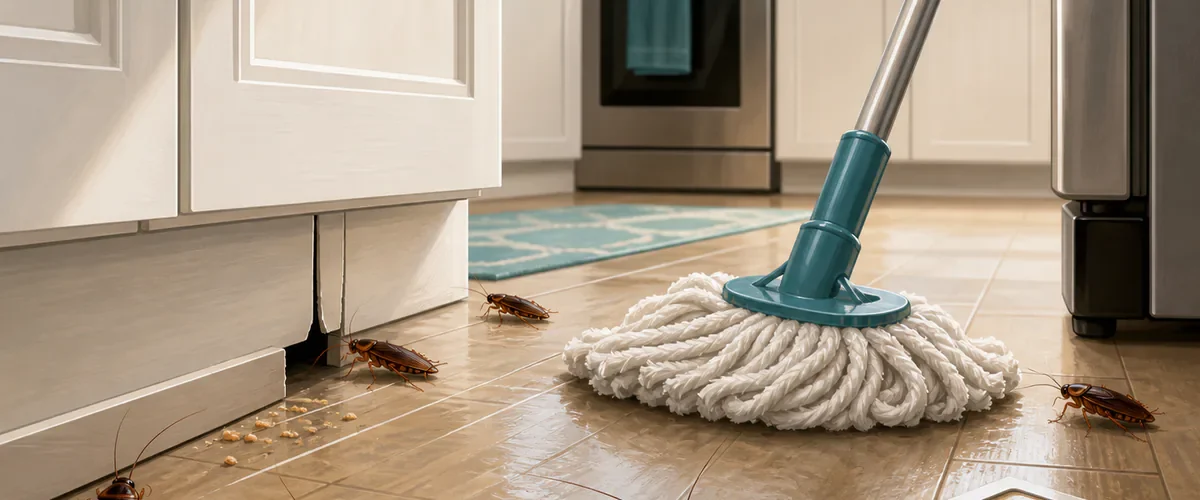
The kitchen floor shines. It smells sharply of vinegar, every crumb is gone, and for a moment the problem seems solved. Then the lights come on after midnight and a cockroach disappears beneath the refrigerator. The cleaning helped, but it never reached the place where the insects live.
To get rid of cockroaches, floor cleaning must be part of a larger control plan. Roaches can survive on tiny amounts of food, grease, water, and glue. They hide in narrow cracks, appliances, cabinets, and wall spaces. A scented mop may disturb them briefly, but it cannot remove an established nest.
What a Clean Floor Actually Does
Cleaning removes crumbs, spills, grease, and food odors that help cockroaches survive. It also makes fresh droppings and insects easier to notice. That is valuable because sanitation makes traps and baits more effective by reducing competing food.
However, vinegar is not a dependable cockroach killer once it dries. Strong-smelling herbs, citrus, and essential oils may change insect movement for a short time without ending the infestation. Bleach is a disinfectant, not a safe pest-control shortcut. Never mix bleach with vinegar, ammonia, or another cleaner.
Build a Better Nightly Cleaning Routine
Remove Food From the Edges
Vacuum or sweep under cabinets, around the stove, and beside the refrigerator. Grease and crumbs collect along these protected edges. Use the cleaner recommended for your floor, then dry the area. Do not leave a wet mop, sponge, or dishcloth on the floor overnight.
Store dry food, pet food, and snacks in sealed containers. Wipe counters and the stovetop, wash dishes, and empty food waste regularly. If pets eat at night, clean the bowls and surrounding floor afterward rather than leaving food available.
Remove Hidden Water Sources
Cockroaches need water. Repair dripping pipes and faucets, dry the sink, and check the tray beneath the refrigerator. Look for condensation around plumbing and appliances. A clean kitchen with a slow leak can still support a large population.
Do not forget bathrooms, laundry areas, basements, and indoor plant saucers. The insects may travel through wall gaps and utility lines, so the room where you see one is not always the room where the problem began.
Use Monitoring Traps to Find Their Routes
Place sticky monitoring traps along walls, beneath sinks, near appliances, and behind toilets, following the product directions. Cockroaches usually travel with their bodies close to edges. Date each trap and record where the most insects appear.
These traps show activity and help measure progress, but they rarely eliminate a whole infestation by themselves. Keep them away from children and pets. Replace dusty or full traps so your information stays useful.
Seal the Gaps They Use
Inspect around pipes, cabinet joints, baseboards, doors, and wall openings. Seal small cracks with an appropriate material once the area is clean and dry. Add door sweeps where light shows under exterior doors. Repair loose screens and gaps around utility lines.
In an apartment, cockroaches can move between units. Tell the property manager promptly and document sightings. Treating only one unit may fail when insects continue arriving through shared walls or plumbing.
Choose Bait Instead of Chasing Every Insect
Gel baits or enclosed bait stations labeled for the cockroach species can reach insects inside hiding places. Apply them exactly as the label directs, in small placements near active routes rather than across open floors. Keep every pesticide inaccessible to children and animals.
Do not spray repellent insecticide on or near bait. The odor may keep cockroaches from feeding. Avoid foggers and bug bombs; they often fail to reach deep hiding sites and can scatter insects, leave residue, or create fire and exposure hazards.
Common Mistakes That Keep Roaches Around
Mopping only the center of the room leaves food along cabinet edges. Moving appliances without cleaning beneath them simply changes hiding places. Crushing the cockroaches you see feels productive but does not address eggs and insects hidden nearby.
Another mistake is applying more pesticide than the label allows. Heavy lines of bait can become stale or be avoided, while loose powders can drift into living areas. More product is not automatically more effective. Correct placement and follow-up matter.
When to Call a Professional
Seeing cockroaches during daylight, finding many young insects, or catching large numbers on several traps can indicate a serious infestation. A licensed pest-management professional can identify the species, locate harborages, and choose a treatment suitable for the building.
Professional help is especially important in multi-unit housing, food businesses, or homes where health conditions make pesticide exposure a concern. Share your trap records and explain which products you have already used.
The Floor Is the Beginning, Not the Cure
A clean, dry floor removes resources and makes every other step work better. But the lasting plan combines sanitation, moisture repair, monitoring, sealing, careful baiting, and repeated inspection.
That may sound less dramatic than a secret cleaning mixture, yet it is how you get rid of cockroaches without relying on a temporary smell. Clean their routes, remove what sustains them, close their entrances, and treat the hidden population with patience.


