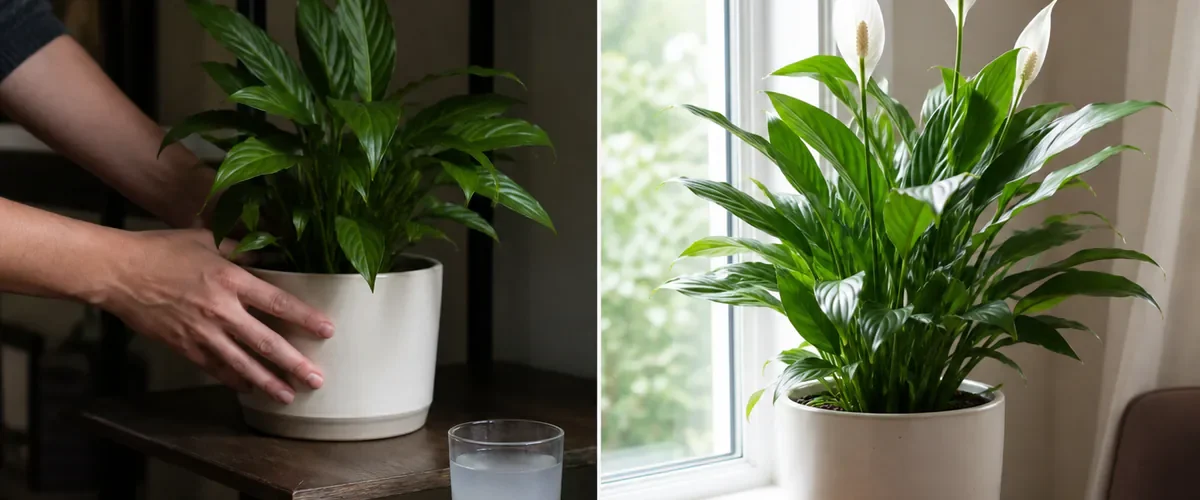
A peace lily sat on the same dark shelf for two years. Its leaves stayed green, so the owner assumed it was happy. When no flowers appeared, she found a recipe for tapioca water and almost poured it in. Then she moved the pot closer to a bright window.
That change addressed a basic need the flour could never replace. Peace lilies tolerate low light, but brighter indirect light makes blooming more likely. Before feeding yours a cloudy kitchen drink, look at the room and the roots.
Why the Ten-Year Tapioca Promise Is Misleading
The recipe usually combines tapioca flour and water and presents the starch as a mineral-rich plant feed. Some instructions call for frequent use and promise years of continuous flowers.
Tapioca flour is mostly starch. Its nutrient content is not a complete, measured fertilizer for peace lilies. Added repeatedly to a damp indoor pot, starch may encourage microbes, mold, odors, or fungus gnats.
A natural ingredient can still disrupt a container. Nothing in the recipe guarantees flowers for ten years.
Find the Brightest Safe Place
Peace lilies grow best in bright, indirect light. An east-facing window often works well. Near a stronger southern or western window, use a sheer curtain or set the plant back from direct rays.
Hot sun can bleach leaves and create dry brown patches, so make any move gradually. Watch how light travels through the room from morning to afternoon.
If the plant has healthy leaves but no blooms, low light is one of the first conditions to review. Fertilizer cannot turn a dark corner into energy.
Let the Soil Answer the Watering Question
Check the upper inch or two of potting mix. When it begins to dry, water the root ball evenly until excess comes through the drainage holes. Empty the saucer.
A plant that droops may be thirsty, but a constantly wet plant can also wilt when roots are damaged. Feel the soil before reacting. Yellowing, black soft roots, and a sour smell point toward overwatering or poor drainage.
Room temperature, light, humidity, pot size, and season change how quickly water is used. That is why pouring tapioca water several times every week can be dangerous.
Inspect the Pot Without Upsizing Too Far
Roots growing heavily from the drainage holes, water running around a dry root ball, or a cracked pot may mean repotting is due. Move up one container size and use fresh, well-draining houseplant mix.
A large jump in pot size leaves too much wet soil around the roots. Repotting also stresses a plant temporarily, so do not expect immediate blooms or add strong feed to force recovery.
Use a Complete Fertilizer Lightly
During active spring and summer growth, use a balanced liquid houseplant fertilizer at the label rate. Depending on the product, feeding may be spaced several weeks apart. Apply to moist soil and record the date.
Peace lilies do not need heavy feeding. Brown tips and white crust around the pot can signal salt buildup. Check whether the potting mix already contains fertilizer before adding more.
Keep a simple care note with watering and feeding dates. It prevents repeat doses and helps you see whether a change in light, temperature, or fertilizer came before new growth or stress.
If the plant is sick, correct light, roots, water, or pests first. Fertilizer supports growth; it does not cure root rot.
Give the Leaves and Air Some Attention
Wipe dust with a soft damp cloth so leaves can use available light. Keep the pot away from heating vents, cold drafts, and sharp temperature swings. Moderate humidity is welcome, but wet leaves still need airflow.
Inspect for mealybugs, scale, mites, and thrips. Isolate an affected plant and use a treatment labeled for the pest and indoor plants.
Flowers Have a Natural Life Cycle
The white “flower” is a spathe surrounding the smaller true flowers. It may turn green and later brown as it ages. Cut the spent stem near the base with clean shears.
A healthy peace lily may flower for many years, but not without pauses. Maturity, cultivar, season, and growing conditions shape each bloom cycle.
Keep It Out of Curious Mouths
Peace lily tissue contains irritating calcium oxalate crystals. Position it away from pets and young children who may chew leaves. Seek veterinary or medical advice if exposure causes mouth irritation, drooling, swelling, or other symptoms.
The Window Test Before the Spoon
Move the plant into brighter indirect light, then observe moisture, roots, temperature, and pests. Feed lightly with a complete labeled product only during active growth. Skip the unmeasured tapioca drink.
That first plant near the window did not bloom the next morning. It produced stronger growth, then buds in its proper season. The wait made the lesson clear: a peace lily needs usable light and healthy roots more than a viral ingredient.


