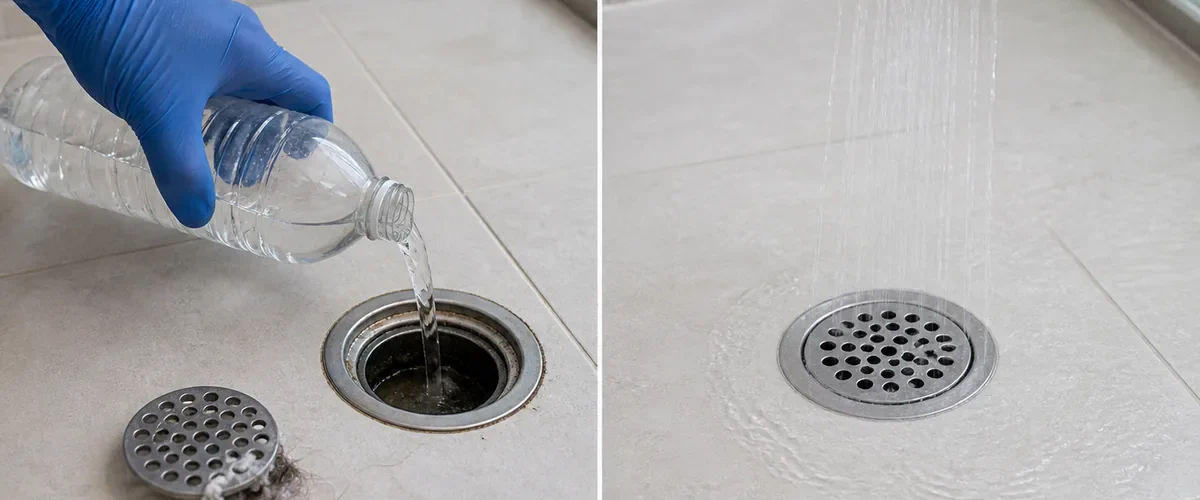
The shower had not been used since the last guest left. Weeks later, the bathroom suddenly smelled like sewage even though every tile was clean. A bottle of plain water solved the mystery in minutes.
The water refilled the drain trap, restoring the barrier that keeps sewer gas below the floor. This is the useful version of the shower bottle trick. If the smell remains, the drain may need cleaning or professional repair, not a stronger homemade mixture.
Start With the Water Barrier Below the Drain
A plumbing trap holds a small amount of water after the shower drains. Sewer gas should stay on the other side of that water. In a little-used bathroom, evaporation may empty the trap.
Fill a clean bottle or jug with tap water and pour it slowly down the drain. Wait, ventilate the room, and check whether the smell fades. Run water regularly in guest showers, floor drains, and sinks that sit unused.
If a trap repeatedly dries, ask a plumber about the cause and whether a trap primer or another correction is suitable.
When the Odor Comes From the Drain Surface
Shampoo, soap, skin oils, hair, and dirt create a film inside the drain. Bacteria feed on that buildup and produce odors. A dirty drain cover may smell even when the trap is full.
Wear gloves and remove the cover only if it is designed to lift or unscrew. Pull out hair with a plastic drain tool, taking care not to push it farther down. Put the debris in the trash.
Wash the cover in warm water with mild dish soap. Scrub only the drain surfaces you can safely reach with a dedicated narrow brush. Rinse with warm tap water and replace the cover securely.
Why Acid and Baking Soda Do Not Fix Everything
The viral method fills a bottle with citric acid solution, puts baking soda in the drain, and combines them to create a strong fizz. The bubbles look active, but acid and baking soda neutralize each other during the reaction.
Fizz may loosen light material near the opening. It does not reliably remove a solid hair plug, repair a leaking seal, clear a blocked vent, or correct a badly installed trap. Large amounts of powder may add residue to an already slow pipe.
The method should never be called permanent because the cause determines whether the smell returns.
Skip Boiling Water and Chemical Experiments
Boiling water can burn skin and may harm some plastic plumbing or seals. Warm tap water is gentler. If your plumbing system needs another method, use instructions approved for its materials.
Never combine drain cleaner, bleach, acid, ammonia, vinegar, or another chemical. A dangerous reaction can produce heat, splashes, or toxic gas. If a commercial product is already in the pipe, do not add anything else.
Keep the room ventilated and tell a plumber which product was used. Follow the original label for emergency and cleanup directions.
Clues That Point to a Plumbing Problem
Listen for gurgling when a toilet flushes or another sink drains. Check whether several fixtures are slow. Watch for water around the shower base, loose covers, or sewage backing up.
An odor that returns soon after the trap is filled can point to a vent, seal, trap, or drain-line problem. Covering the drain with fragrance only hides a clue that a plumber needs to see.
Leave the bathroom and seek urgent advice if the odor is extremely strong or anyone develops headache, dizziness, nausea, or breathing trouble.
Simple Habits Keep a Healthy Drain Fresher
Use a hair catcher and empty it after showers. Rinse thick product from the floor, clean the cover on a regular schedule, and never pour cooking grease into bathroom plumbing.
Run water in every fixture before and after a long trip. Notice a slow drain early and remove accessible hair before the blockage grows.
What Not to Send Down the Shower
Do not rinse paint, plaster, wax, oils, pet litter, or large amounts of soil into the drain. These materials can harden, cling to pipes, or interfere with wastewater systems. Wipe oily product from containers before washing them.
Body scrubs and thick conditioners can also collect with hair. You do not need to stop using every product, but a fine catcher and regular surface cleaning keep more material above the pipe where it is easy to remove.
If a dropped cap or object disappears into the drain, do not push it deeper with a stick. Stop using the shower and retrieve it with the correct tool or call a plumber.
What the Plain Bottle Reveals
A bottle of water is a quick test, not a magic cleaner. If it restores a dry trap, the odor may disappear almost immediately. If it does not, clean reachable buildup and inspect the wider plumbing symptoms.
The best result is not a dramatic fizz. It is knowing whether the smell came from evaporation, grime, or a fault that needs a professional. That answer is how you keep sewage odor from becoming a regular guest.


