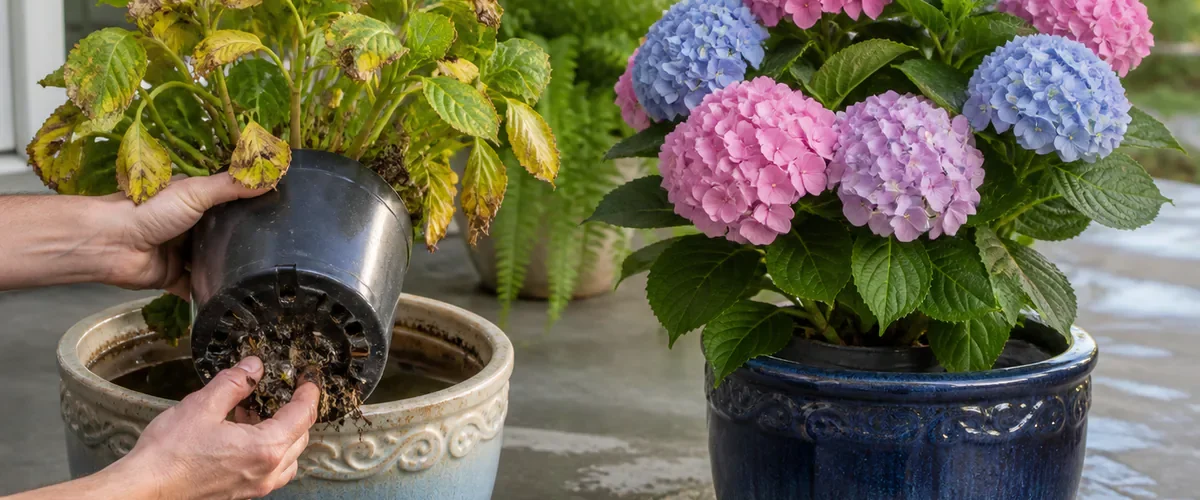
A wilted hydrangea can look beyond rescue. Flower heads touch the ground, leaf edges turn brown, and the owner responds with more water, more fertilizer, and a quick pruning.
Those three reactions can deepen the trouble. Hydrangea recovery begins with identification and the roots. Work through these seven common disasters in order, changing only what the plant actually needs.
Disaster 1: The Variety Has No Name
Find the nursery label, receipt, or an old photo. Bigleaf, panicle, smooth, and oakleaf hydrangeas differ in sun tolerance, winter hardiness, flower shape, and pruning time.
Bigleaf hydrangea commonly has round mophead or flat lacecap flowers. Panicle types make cone-shaped clusters. Smooth hydrangeas include rounded white-flowering cultivars, while oakleaf types carry deeply lobed foliage.
When the identity remains uncertain, avoid major pruning or soil amendments until a local expert helps.
Disaster 2: The Root Ball Is Dry Inside
Push a finger or narrow trowel several inches below mulch. Newly planted hydrangeas may have a dry nursery root ball even while surrounding soil feels wet because water runs around the original mix.
Water slowly over the root area and let it soak deeply. Recheck after watering. Build a low soil basin only when appropriate for the site, and remove it once the shrub establishes so water does not collect permanently.
Afternoon droop during extreme heat can be temporary. If soil is moist and the leaves recover by morning, another soaking may not be necessary.
Disaster 3: Water Has Nowhere to Drain
Constant wetness can cause the same wilt as drought because damaged roots stop supplying leaves. Smell the soil and look for yellowing, soft roots, or a pot standing in water.
Clear container holes and empty decorative cachepots. In the garden, redirect roof runoff and correct drainage before replacing the shrub. Do not hide a wet crown under more soil and mulch.
Disaster 4: Light and Heat Fight Each Other
Many bigleaf and oakleaf hydrangeas perform well with morning sun and afternoon protection, especially in hot regions. Panicle hydrangeas tolerate and often flower well in stronger sun when moisture is available.
Deep shade reduces buds and weakens stems. Harsh reflected afternoon heat scorches leaves and empties the root zone quickly. Record several summer days of exposure before deciding whether to move the plant.
Transplant during a cooler suitable season, not during bloom and a heat wave. Water the new site before and after the move.
Disaster 5: Fertilizer Arrives Before Diagnosis
A stressed hydrangea cannot be forced healthy with a strong feed. Fertilizer salts can burn dry or damaged roots. Excess nitrogen creates soft leaves and fewer flowers.
Test garden soil and follow the report. Add a suitable slow-release fertilizer only at the timing and rate recommended for your species and region.
Spread organic mulch two or three inches deep to moderate moisture, leaving clear space around every stem. Finished compost may be useful, but repeated thick applications can build excess nutrients.
Disaster 6: Pruning Removes Next Year’s Flowers
Bigleaf and oakleaf hydrangeas generally flower on old stems. Their buds form in late summer and survive winter on the branches. Pruning them in fall or spring can remove the show before it starts.
Prune these old-wood types soon after flowering and only as needed. Panicle and smooth hydrangeas flower on new growth and can be pruned in late winter or early spring.
Wait for spring growth to show dead wood clearly. Remove dead or crossing stems with clean sharp pruners and avoid cutting the whole shrub just because a short video recommends it.
Disaster 7: Bloom Color Becomes a Chemistry Experiment
Some bigleaf and mountain hydrangeas can change between pink and blue because soil pH affects aluminum availability. White flowers do not turn blue through acid treatment.
Test pH before applying elemental sulfur or aluminum sulfate. Use the measured recommendation and allow changes to happen gradually. Coffee grounds and vinegar are not controlled pH programs.
Protect Flower Buds From Winter
A bigleaf shrub may grow healthy leaves but fail to bloom because winter cold killed old-wood buds. Select a cultivar hardy for the region and site it away from exposed wind.
Maintain mulch over roots and add breathable winter protection when local guidance suggests it. Do not seal wet branches in plastic. Rabbits may also remove buds, so a wire barrier can matter.
Know What the Leaves Are Saying
Crisp brown margins suggest heat, wind, drought, or salt damage. Yellowing may point to wet roots, pH trouble, or nutrient shortage. White powder, dark spots, and distorted growth call for disease or pest identification.
Give the shrub space, direct irrigation toward soil, and remove badly infected fallen foliage. Use a pesticide only when the pest is known and the product label includes hydrangea and that problem.
Rescue Begins With One Calm Check
No care guide can promise that a damaged hydrangea will live forever. It can prevent the common response of watering wet roots, feeding a thirsty plant, or pruning off healthy buds.
Start with the name and moisture several inches down. Once those two facts are clear, the next move usually becomes simple, and a shrub that looked finished may have a real path back to bloom.


