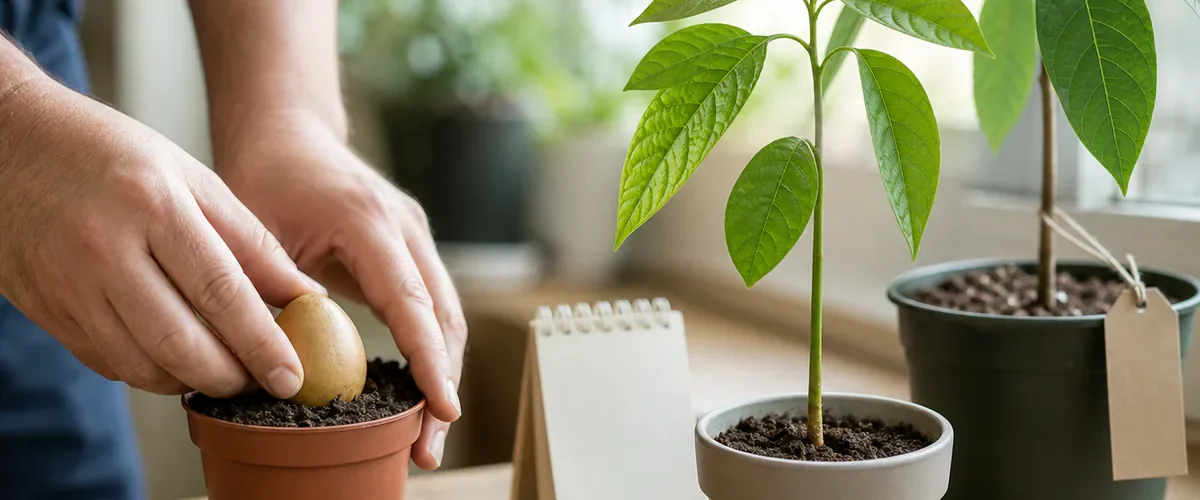
Growing an avocado pit feels like opening a slow surprise. Nothing happens for days. Then the seed splits, a white root curls downward, and a green stem rises from the center. The transformation looks professional even on a kitchen windowsill.
The easiest reliable method is to plant an undamaged pit directly in draining mix. Warmth, light moisture, and patience do the work. The wait for fruit is a different story: seed-grown avocados may need many years and may never produce indoors.
Begin With an Intact Seed
Scoop the pit from a ripe avocado without stabbing it. Wash off every trace of flesh because residue encourages rot. Keep the brown covering in place; it protects the seed.
Ignore advice to remove the inner skin with a knife. A small cut can damage the embryo. There is also no need to shake the pit to test whether it is “mature.” A full-sized, firm, healthy pit is enough.
Notice its shape. The broad base produces roots and faces down. The slightly pointed end faces up.
Plant the Pit Directly in Soil
Choose a modest pot
Start with a container about 6 inches across, using one with several drainage holes. An oversized pot stays wet around the seed and is harder to manage.
Use loose potting mix
Fill the pot with a fresh, free-draining indoor mix. Garden soil compacts in containers and may carry pests or disease.
Leave the top exposed
Press the wide end into the mix and leave the upper third visible. Water thoroughly, let the pot drain, and empty the saucer.
Provide gentle warmth
Set the pot in bright indirect light at normal warm room temperature. Keep the mix lightly moist. A pit in cold, saturated soil is more likely to rot than sprout.
Do not dig it up every week to check. Germination can take a month or longer. A natural crack is usually the first sign of progress.
Why Soil Can Be Easier Than Toothpicks
The water-glass method lets you watch the root, which makes it fun for children and classrooms. It also creates water roots that may be fragile during transplanting.
Direct planting allows the first roots to develop in the medium where they will continue growing. You cannot see every stage, but you avoid moving a long slippery root through soil.
If you use water, keep only the broad lower section submerged, change cloudy water, and transfer the pit before roots become a tangled mass.
Care for the First Leaves
Once a shoot appears, give it progressively brighter light. Turn the pot so the stem does not lean hard toward a window. Introduce direct sun gradually because new leaves scorch easily.
Water when the upper inch becomes dry. Soak the entire root ball and allow it to drain. A dry surface can hide wet soil below, so lift the pot and learn its weight.
Wait to fertilize until several mature leaves have formed and growth is active. Then use a balanced houseplant product at a weak label rate. The seed feeds the earliest stage.
Shape a Stronger Houseplant
Bright light is the first defense against a tall, thin stem. Once the plant is established, pinch the tender growing tip to invite branching. Give it time before trimming again.
Repot when roots circle densely or exit through the holes. Move up one size and keep the stem at the same depth. A pot that is much too large increases the risk of soggy mix.
Brown tips can result from drought, salt buildup, or dry air. Yellowing often follows wet roots. Check care conditions before adding another product.
The Long Wait Nobody Mentions
A seed does not copy the avocado you ate. It carries a new genetic combination, so any future fruit can differ in flavor, shape, and quality.
Seed-grown avocado trees stay juvenile for years. Some eventually flower outdoors in a suitable warm climate. Indoor plants usually lack the light, space, and pollination conditions for dependable fruit.
A three-year guarantee is not realistic. Even a healthy seedling may remain ornamental.
Choose a Grafted Tree for a Harvest
A grafted avocado has fruiting wood from a known cultivar attached to selected rootstock. It generally flowers sooner and produces the expected variety.
Ask a local nursery which cultivar fits your winter temperatures, summer heat, available space, and pollination situation. Some trees become far too large for permanent indoor growing.
A grafted tree still needs sun, drainage, correct irrigation, and time. It improves the odds; it does not remove plant care.
The Professional Trick Is Honest Patience
Keep the pit intact, plant it wide end down, and give it warmth without soggy soil. That uncomplicated method allows the seed to perform its impressive transformation.
Enjoy the new tree for its glossy leaves and the story behind it. If you dream of bowls of homegrown avocados, start a grafted cultivar beside it. One plant delivers the experiment, and the other carries the realistic harvest plan.


