The orchid slides out of its pot and half the roots collapse between your fingers. The bark is dark, the crown looks tired, and the easiest decision is the rubbish bin. Before making it, check for one firm section of living tissue. That small survivor is where the one-pinch rescue begins.
Plain cinnamon can help protect a clean wound after rot is removed. It cannot revive a dead root, sterilize sour potting bark, or cure every disease. The pinch matters only after the plant receives careful surgery and a drier home.
Step One: Quarantine Before You Diagnose
Carry the orchid away from the collection. Place it on a washable surface and use separate tools. Fungal and bacterial problems may move in splashing water, dirty scissors, or reused pots.
Look and smell. Root rot often comes with wet broken-down medium and soft, hollow, or brown-black roots. Bacterial tissue can be watery and foul-smelling. Fast-moving black damage in leaves or the crown requires urgent removal and may need an orchid-specific treatment.
Firm roots can be silver, green, tan, or stained by bark. Do not cut only by color. Squeeze gently and keep roots that remain solid.
Step Two: Build a Clean Rescue Station
Prepare a sharp sterile blade, gloves, a clean pot with drainage, and fresh orchid medium before cutting. Sterilize tools again if you move from suspect tissue to a new area. Never return the sick plant to its old bark.
Wash away enough medium to see the roots. Trim each dead section back to healthy firm tissue. For an infected leaf, cut beyond visible disease into clean tissue when appropriate. Place waste directly into a bag.
If every root and the crown are soft, no kitchen ingredient can rebuild the plant. Discarding one badly diseased orchid may protect the rest of the collection.
Step Three: Use the Pinch in One Exact Place
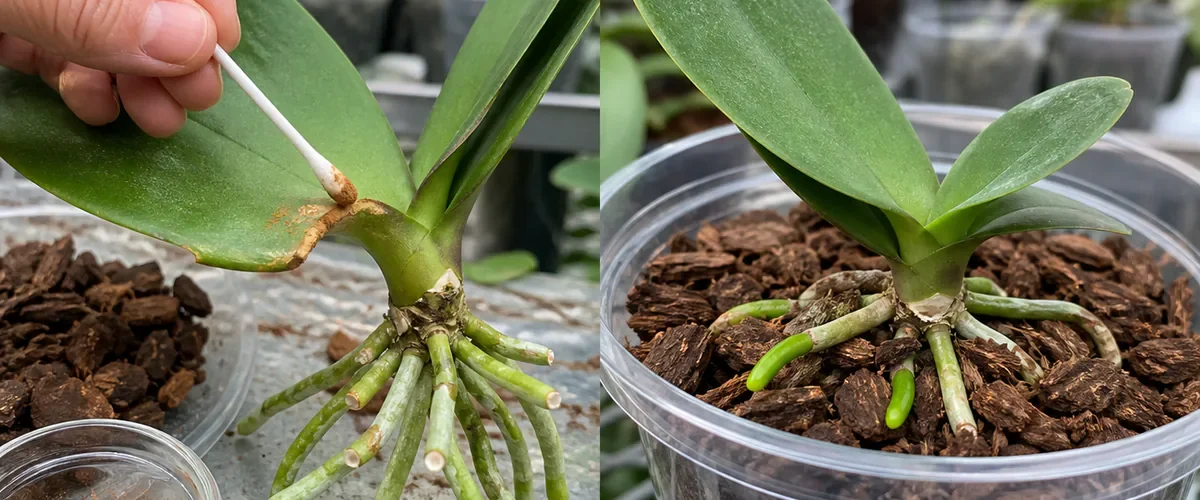
Dip a clean dry cotton swab into plain ground cinnamon. Touch a thin layer onto the exposed cut surface of a leaf, stem, or pseudobulb. Cover the wound without coating the entire plant.
Cinnamon is drying and has antifungal use on orchid cuts. That same drying quality is why it should not be rubbed over living roots. Do not add spoonfuls to the pot or mix it into watering water.
For a confirmed serious disease, follow expert guidance and use a fungicide or bactericide labeled for the orchid and problem if recommended. Cinnamon is a wound aid, not universal medicine.
Step Four: Repot for Maximum Air
Select a pot only large enough for the surviving root system. Too much wet medium around a weak plant invites another round of rot. Arrange fresh bark around the roots loosely and keep the crown above the surface.
Secure the orchid with a clip or stake so new root tips are not damaged by wobbling. Make sure water can move through and out of every drainage hole. A decorative outer pot must never hold a hidden pool.
Step Five: Give Recovery Conditions, Not Bloom Conditions
Place the plant in bright indirect light with gentle airflow and stable warmth. Avoid hot direct sun while leaves and roots are stressed. Let cut areas dry as appropriate before normal watering resumes.
When you water, soak the medium and drain fully. Keep water out of the crown. Do not mist the orchid several times a day to replace missing roots; constant surface moisture helps rot return.
Wait before fertilizing. Strong feed can burn the few roots left. Once fresh green root tips or a new leaf show active growth, begin a suitable orchid fertilizer weakly and follow its label.
Read the Leaves Without Panicking
Wrinkled leaves may stay wrinkled after rescue because damaged roots cannot restore old tissue quickly. That does not mean the orchid needs daily water. Watch the newest leaf and root tips instead.
Yellowing that continues upward, spreading black tissue, a return of foul odor, or a soft crown signals failure or renewed disease. Isolate the plant and reassess immediately.
What the Before-and-After Picture Leaves Out
A rescued orchid may spend months rebuilding before it blooms. The first after-picture should show rot that has stopped, bark that smells clean, and one new root reaching into the pot. Flowers are a later reward.
The one pinch of cinnamon earns attention because it is simple and visual. The true rescue happened in every step around it: quarantine, sterile cutting, complete removal of rot, fresh airy bark, and patient watering. When living tissue remains, that routine can turn the orchid everyone would toss into the plant nobody expected to survive.
Keep the recovering orchid separate until several inspections find no advancing damage. Disinfect the bench, wash hands, and sterilize reusable pot clips before they return to the collection. Photograph the roots at repotting and compare them monthly; a firm green tip is better evidence than daily lifting and handling, which can break the very growth you waited to see.


