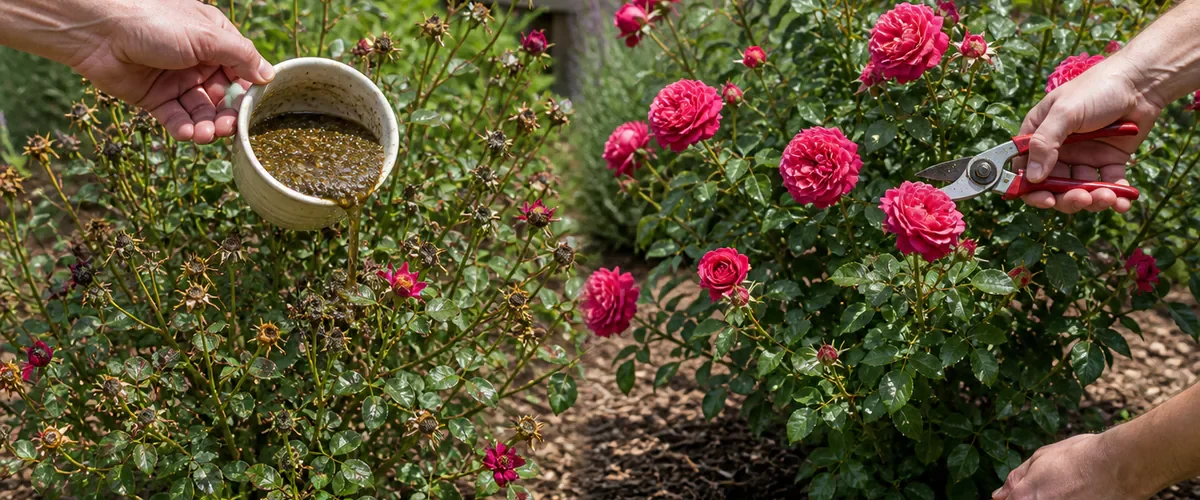
For two glorious weeks, the rose is covered in color. Then petals fall, bare stems remain, and the bush seems to forget how to flower. A handful of miracle fertilizer looks like the fastest way to bring the show back.
That pause can be normal. Many modern repeat-blooming roses flower in waves, resting between one flush and the next. The secret is not forcing flowers every day. It is protecting the cycle that lets the plant replace spent blooms with healthy new shoots and buds.
Confirm That Your Rose Can Repeat
Some old garden roses and ramblers bloom once each year. No feeding trick will turn their natural schedule into nonstop flowering. Other shrub, floribunda, hybrid tea, miniature, and climbing roses may repeat, but the pattern differs by variety and climate.
Look up the plant name on its tag or ask the nursery where it was purchased. If the name is unknown, watch it for a full season. One huge spring display followed only by leafy growth may be its normal habit.
Give the Bush Enough Direct Sun
Most roses bloom best with at least six hours of direct sun. Morning light is especially useful because it dries wet leaves. A bush shaded by a growing tree or new fence may survive but produce fewer buds.
Track the spot from morning to late afternoon rather than guessing. If a container rose needs a brighter place, move it gradually. A sudden jump from shade into hot midday sun can scorch leaves.
Leave Space for Air
Branches pressed against a wall or tangled through the center stay damp longer. Remove dead, damaged, diseased, and rubbing wood at the correct season. Keep enough open growth for air to move while preserving the natural shape of the rose.
Water Deeply, Then Let Roots Breathe
A quick splash wets the surface but may leave deep roots dry. Water the root zone slowly until moisture reaches several inches into the soil. During hot or dry weather, check more often. Established garden roses commonly benefit from a deep weekly watering, adjusted for rain and soil.
Avoid keeping the ground constantly soggy. Heavy soil and blocked containers can starve roots of air. Add a two- to three-inch organic mulch layer to slow evaporation, but leave a small open ring around the canes.
Water near the soil when possible. Wet leaves are not automatically diseased, but keeping them damp overnight can favor some problems.
Deadhead to Start the Next Wave
A repeat-blooming rose may spend energy forming hips after flowers fade. Removing spent blooms can direct growth toward new flowering shoots. Cut with clean pruners above a healthy outward-facing leaf or bud, following advice for that rose type.
Do not rip flowers off or remove long sections of healthy cane every week. The leaves below each bloom make energy. Near autumn, gardeners in cold climates may stop deadheading so growth can slow and hips can form.
Feed for Steady Growth, Not a Sudden Rush
Apply a balanced rose fertilizer according to the label and local timing. Many roses receive food in spring as active growth begins, with another measured feeding later in the season. Stop early enough for plants in cold regions to prepare for winter.
Do not pile powder against the canes or double a dose after one quiet week. Too much fertilizer can burn roots and produce soft leafy growth that attracts pests. Water as directed before or after feeding, and keep granules off foliage.
Let Soil and Growth Guide You
A soil test can reveal pH and nutrient issues in a garden bed. Long weak stems with few flowers may be caused by shade or excess nitrogen. Yellow leaves can come from wet roots, drought, pests, disease, or normal aging. One color change is not proof that the plant needs food.
Protect the Leaves That Power New Buds
Inspect both sides of leaves and soft shoot tips. Aphids, mites, sawfly larvae, black spot, and powdery mildew can weaken the leaf canopy. Identify the problem before treating. Remove heavily diseased fallen leaves and dispose of them as local guidance recommends.
Use a pesticide only when it is labeled for the exact pest and plant. Follow directions and protect pollinators by avoiding open flowers whenever the label requires it. A strong stream of water or hand removal may handle a light aphid problem without a spray.
Prune at the Time Your Rose Needs
Main pruning often happens near late winter or early spring, but rose type and climate matter. Once-blooming climbers may flower on older wood that should not be cut before its display. Repeat climbers can also need lighter, more selective work.
Begin by removing dead and diseased wood. Make clean cuts with sharp tools and disinfect them when disease is present. Do not flatten every cane to one height simply for a tidy outline.
Expect Weather to Interrupt the Show
Extreme heat can slow bud formation and make petals drop quickly. A newly planted rose may focus on roots. Cold weather naturally ends the season in many places. These pauses do not mean the care routine has failed.
Record the date of each flush, deadheading, feeding, and major heat wave. After one season, you will see how long the rose usually rests. That knowledge prevents panic feeding and helps you recognize a real change.
Restore the Repeat-Bloom Cycle
- Identify a repeat-blooming variety.
- Provide enough direct sun and moving air.
- Water the root zone deeply and mulch lightly.
- Deadhead without stripping useful leaves.
- Feed measured amounts during active growth.
- Protect healthy foliage and prune by rose type.
Your rose stops after spring until this repeat-bloom cycle is restored. Even then, it will pause between waves and rest when the season ends. Respect those limits, and the reward is better than an impossible promise: a vigorous bush that returns to color again and again when conditions are right.


