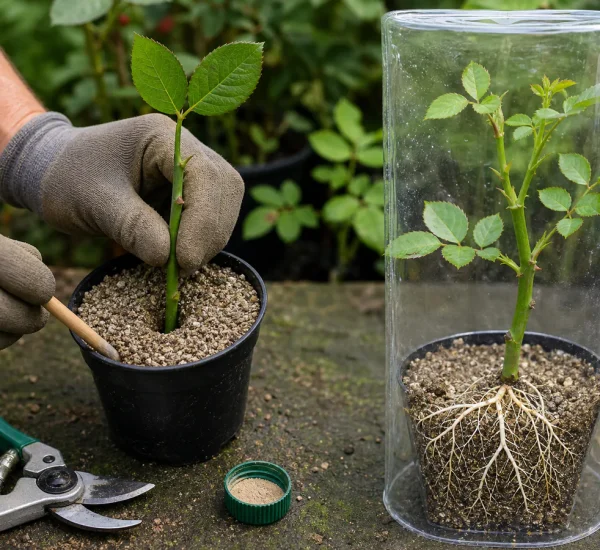
The success of a rosemary cutting is often decided before it reaches the water. A crushed stem, flowering tip, or brown woody branch may sit in a glass for weeks without producing a root. One clean cut below a young node changes the odds.
Water propagation lets you see roots form, which makes it satisfying for beginners. Rosemary can still be slow and unpredictable, so prepare several short cuttings and keep the glass simple. Clean water is more useful than any secret ingredient.
Find a stem ready to make roots
Inspect the parent rosemary for mites, scale, spots, or wilt. Choose a flexible nonflowering shoot with fresh green growth and a lower section that is beginning to firm. Avoid thick old wood and very soft tips that bend like grass.
Aim for a stem four to six inches long. Taking several small tips from different sides keeps the parent plant balanced. Water the parent normally the day before if its soil is dry, but do not take cuttings from a badly stressed plant.
Make the clean cut that matters
Sanitize sharp pruners appropriately and allow them to dry. Cut just beneath a leaf joint, called a node. A smooth cut has less damaged tissue than a stem pinched or torn by hand.
Strip leaves from the bottom two inches. Keep a compact tuft above the water line. If flowers are present, remove them so the cutting does not spend its limited moisture trying to maintain blooms.
Do not scrape the stem deeply or split its base. Rosemary contains aromatic oils, but an injured cutting can still rot.
Build a clean rooting glass
Wash a narrow clear glass and add room-temperature water. Lower the bare nodes into the water while every remaining leaf stays dry. Use separate glasses if several cuttings crowd one another.
Place the setup in bright indirect light. A sunny windowsill can heat clear water fast and stress an unrooted stem. A cold ledge slows growth. Choose steady room conditions away from heaters and drafts.
Refresh, do not feed, the water
Replace the water every two to four days, depending on cloudiness and room warmth. Rinse the container gently before refilling. Keep the same nodes covered, but do not submerge more leaves.
Skip fertilizer, sugar, honey, yeast, aspirin, and rooting powders made for soil. Organic additions can feed microbes, while concentrated nutrients may injure a stem with no working roots. If using a commercial rooting product, follow its exact label and method.
Recognize progress and failure
Small pale bumps may appear before roots extend. New roots can take several weeks. The top should remain reasonably firm and green, although an older lower leaf may drop.
Discard a cutting if the base becomes black, slimy, hollow, or foul-smelling. Wash the glass before placing another stem inside. If all cuttings fail, try younger material or root the next group in a sterile, airy propagation mix instead.
Transplant before water roots become tangled
Wait until the cutting has several roots about one to two inches long. A single tiny root may break, while a mass of long roots is difficult to place in soil.
Fill a small draining pot with a light mix suited to rosemary. Make a planting hole, lower the roots without folding them sharply, and settle the mix around the original bare stem. Water once and let the pot drain.
For the first several days, keep the mix evenly but lightly moist. Do not leave it saturated. As fresh top growth appears, let the surface dry more between thorough waterings.
Move the young plant toward sunshine
A newly transplanted cutting needs time before full outdoor sun. Begin with bright indirect light and introduce direct sun gradually over a week or more. Protect it from frost, strong wind, and extreme afternoon heat.
Once established, rosemary prefers abundant sun and excellent drainage. Rotate a container for even growth and empty the saucer after watering. A plant kept constantly wet can lose roots quickly.
Common propagation mistakes
- Choosing a flowering or woody branch because it looks stronger.
- Leaving aromatic leaves below water, where they decay.
- Placing the jar in hot direct sun.
- Waiting for roots to grow into a tangled ball.
- Moving the cutting into heavy garden soil with no drainage.
Harvest later, not immediately
Give the plant several weeks of clear new growth before taking leaves. Pinching one small tip can encourage branching, but heavy cutting removes the energy source the new roots need.
There is no endless supply from the first day. A patient start creates a stronger plant that can tolerate regular light harvests later.
The root begins with the cut
A jar makes the process visible, but the decisive moment happens at the parent plant. Select flexible growth and cut cleanly below a node.
Keep the water fresh, transplant at the right root length, and give the new rosemary drainage and sun. That one careful cut can become a fragrant plant without any magical liquid in the glass.