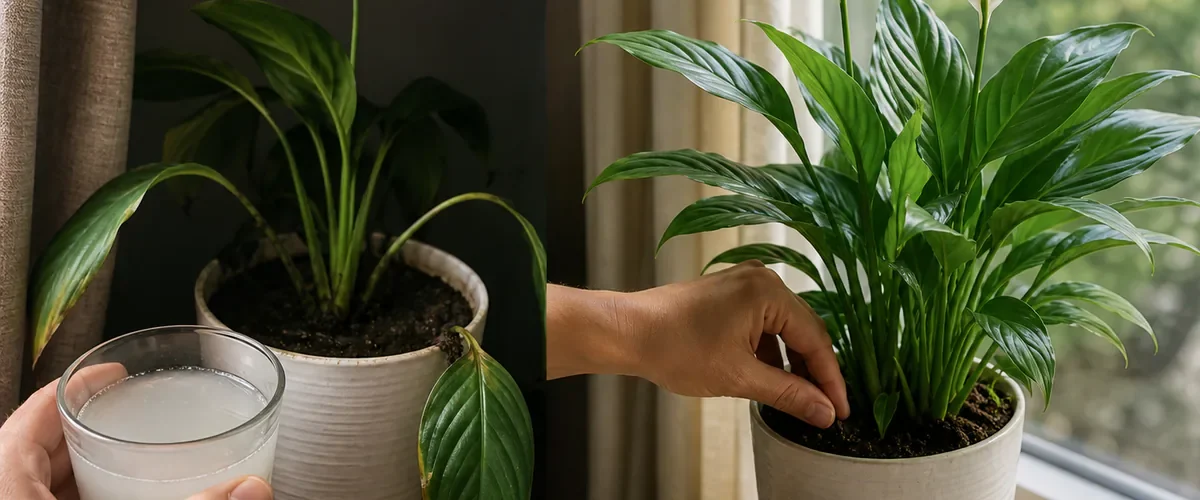
When a peace lily stops flowering, one cup of milky rice water feels like an easy answer. The plant receives water and kitchen nutrients, so white blooms should rise. Yet the cup misses the reason many peace lilies stay green: their room is too dark, their roots stay wet, or their care no longer matches active growth.
Fix those limits, and the plant has a far better chance of blooming than it does with frequent starch around its roots.
Low-Light Survival Is Not Blooming Light
Peace lilies tolerate dim rooms, which makes them famous as low-light plants. In very low light they often produce fewer spathes and grow slowly.
Move the pot gradually into bright indirect light. A position near an east window or behind a sheer curtain can provide more energy without burning leaves. Clean dusty foliage and rotate the plant for balanced exposure.
Direct hot sun can create pale patches and brown scorch. If natural light is limited, a suitable grow light on a timer may help.
A Droop Can Mean Two Opposite Things
Dry roots cause dramatic wilting. So do damaged roots sitting in wet, airless soil. Before adding one cup, push a finger or wooden stick below the surface and lift the pot.
If the mix is dry and light, water completely until excess drains. Empty the saucer. If the mix is wet, smells sour, or remains heavy for many days, inspect drainage and root health instead.
Do not wait for full collapse at every watering. Repeated severe wilting stresses the plant. Learn when the upper mix begins to dry and water before the leaves fall flat.
Make Room for Air Around Roots
Use an indoor potting mix that drains while retaining moderate moisture. The pot needs open holes and should not be much larger than the root ball.
Peace lilies can flower while slightly snug, but circling roots and a pot that dries immediately may call for repotting. Separate divisions only when each has enough roots and leaves to recover.
Keep the crown at its original depth and never leave water hidden in a decorative cover pot.
What Rice Water Adds—and What It Cannot
Blended rice water contains starch and an unpredictable amount of nutrients. It is not a complete fertilizer. In warm moist mix, residue can support mold, sour odors, and fungus gnats.
Using it several times per week also ignores whether the pot needs water. Straining removes solid grains but not all starch. The freezer preserves leftovers for later; it does not balance their nutrient content.
Keep rice in the kitchen and choose a product designed for plants.
Feed Only When Growth Can Use It
Apply a complete houseplant fertilizer at the labeled rate during active growth. Bright light and healthy roots must come first. Too much fertilizer creates salt buildup, brown tips, and root injury.
Use moist soil, measure carefully, and flush occasionally with plain water. Reduce feeding when cooler seasons and shorter days slow growth.
Check the Room Around the Plant
Peace lilies prefer stable warmth away from cold doors and heating vents. Moderate humidity supports leaves, but droplets sitting on foliage in still air can lead to spots.
Check for mites, scale, mealybugs, and thrips beneath leaves and around stems. Pest damage and sticky residue call for identification and appropriate treatment, not extra fertilizer.
Understand the Bloom You Are Waiting For
The white structure is a spathe surrounding a spadix. It naturally turns green or brown as it ages. Cut the spent stalk near the base with clean scissors.
Peace lilies flower in cycles. Variety, maturity, light, root health, and season affect how often. “All year” is possible only as occasional repeating blooms under excellent conditions, not as a permanent white display.
Keep a Simple Bloom Log
Mark watering, fertilizer, window changes, and each new spathe on a calendar. Also note how many days the mix takes to dry. Within a season, the record can show whether brighter light improved growth or whether a larger pot began staying wet too long. Photographs of the newest leaves make gradual improvement easier to see. The log prevents random extra feeding and turns this peace lily’s own behavior into your best guide.
Keep the Plant Away From Curious Mouths
Peace lilies contain irritating calcium oxalate crystals. Place them beyond the reach of pets and children and do not allow leaves to be chewed. Wear gloves if the sap bothers your skin.
The Real Reason Can Be Fixed
A thirsty peace lily may rise after one cup of plain water, but that quick recovery should not be confused with flower production. Blooms require weeks of healthy growth.
Increase filtered light, water by root-zone need, protect drainage, keep a stable temperature, and use measured complete nutrition. When the next spathe opens, it will prove that the real reason for the bloom pause was finally addressed.


