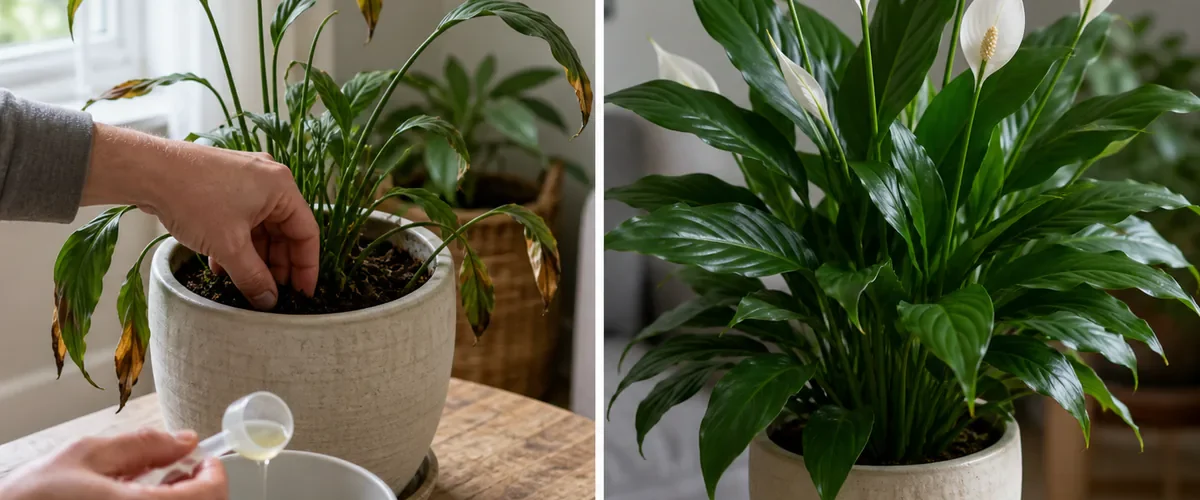
The flower buds were supposed to appear after one teaspoon. Instead, the leaf tips turned brown and the soil developed a pale crust. The problem was not that the houseplant needed a stronger trick. It was that nobody had checked what was already happening inside the pot.
A measured dose of the right fertilizer can help a plant during active growth. But it works only after light, water, roots, temperature, season, and pests are in order. This quick check tells you whether the famous one-teaspoon flower trick has any place at all.
Step One: Name the Plant
“Houseplant” is not one set of instructions. Orchids grow differently from African violets. Peace lilies have different flowering signals from holiday cacti. Even two plants with similar leaves may prefer different moisture and light.
Use the nursery label, a reputable plant guide, or help from a local expert to identify it. Once you know the species, learn its normal flowering season. A plant resting between bloom cycles does not necessarily have a problem.
Step Two: Follow the Light for a Full Day
A room may feel bright to people while providing little useful light to a plant. Notice when direct sun reaches the leaves, how far the pot sits from the window, and whether a roof or tree blocks the sky.
Many flowering houseplants need bright light to build buds, though the safe amount differs. Move a shade-grown plant gradually because sudden direct sun can scorch it. Clean dust from broad leaves and rotate the pot for balanced growth.
Step Three: Check Moisture Below the Surface
Do not assume the plant needs water because the top looks pale. Feel the mix at the depth recommended for that species. A wooden stick or the weight of a small pot can offer another clue.
When watering is due, soak the mix evenly and allow extra water to drain. Empty decorative covers and saucers. Roots left in standing water can lose oxygen, rot, and stop supporting flowers.
On the other hand, repeated severe wilting can make a plant drop buds. Adjust your checks as indoor heat, sunlight, and the season change.
Step Four: Inspect the Roots and Pot
Roots emerging from every hole, circling into a dense mat, or lifting the plant may mean it needs a slightly larger container. Soft dark roots and a bad smell suggest rot. Healthy root color varies, but mushiness is a warning.
Choose a pot with drainage and a mix suited to the plant. A very large pot holds wet soil around a small root system for too long. Repotting is not a cure for every slow-growing plant, so disturb roots only when there is evidence.
Step Five: Search for Tiny Pests
Look beneath leaves and along stems with good light. Cottony mealybugs, hard scale bumps, fine mite webbing, or thrips damage can steal energy and deform buds.
Move an infested plant away from the collection. Identify the pest before choosing a labeled treatment, and repeat inspections because eggs or hidden insects may survive one cleaning.
Now Decide Whether Fertilizer Makes Sense
If the plant is healthy and actively growing, select a complete fertilizer intended for houseplants or that species. Read the concentration and rate. “One teaspoon” is safe only when the product label says one teaspoon for the exact amount of water you are mixing.
Apply fertilizer to lightly moist soil unless its directions say differently. Dry roots are easier to burn. Mark the date so the plant is not fed twice by different family members.
Reduce or pause feeding during the plant’s rest period. Fertilizer is not food in the usual sense; leaves use light to make energy. Nutrients support that process, but they cannot replace light.
Warning Signs That You Added Too Much
Brown tips, sudden wilt, leaf drop, and white crust on the mix or pot can point to fertilizer salt buildup, though other problems can look similar. Stop adding products and review care.
Depending on the plant and water quality, reliable guidance may recommend flushing the mix or repotting. Make sure water can drain freely before attempting to wash salts through.
Skip the Mystery Ingredients
Sugar water, coffee grounds, banana peel liquid, baking soda, and Epsom salt are not complete universal fertilizers. Indoor pots are small systems, so an unmeasured ingredient can quickly alter moisture, salts, or microbial growth.
A fragrant kitchen mixture may also attract flies or encourage mold. Use finished compost only where it suits the plant and potting method, and use commercial nutrients at their labeled strength.
The Check That Makes Flowers More Likely
Identify the plant, match its light, water when its roots need it, inspect the pot, and control pests. Respect any cool period, long night, or seasonal rest required to set buds. Feed only during the right stage.
The teaspoon is not the miracle. The careful check before it is. Once the hidden stress is corrected, new leaves and buds can arrive without burning the roots that had to build them.


