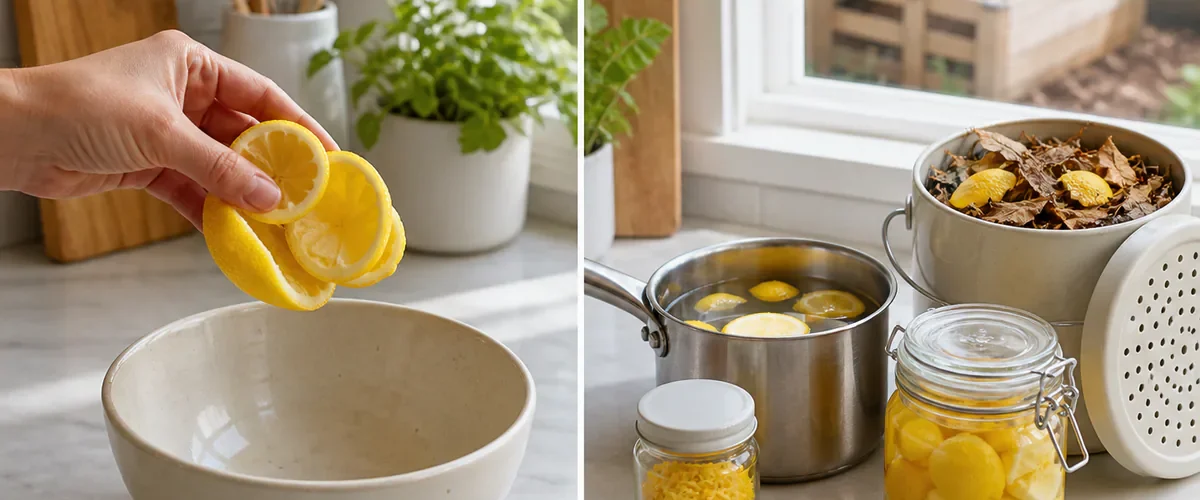
Squeezed lemon halves often land in the rubbish while their best second uses are still available. The peel can flavor tomorrow’s meal, perfume a room for a short time, help with limited cleaning, or become compost. The choice needs to happen before the scraps grow old.
These four uses are practical, but lemon is acidic and its oil can irritate. Keep food uses separate from cleaning, never mix household chemicals, and do not save moldy peel just because it once smelled fresh.
First use: freeze fresh lemon zest
Before squeezing, rinse the whole lemon under running water and scrub the surface gently. Dry it, then grate only the bright yellow outer layer. Avoid digging into the white pith, which tastes bitter.
Spread the zest briefly so it does not freeze in one wet mass, then store it in a labeled airtight container. Add small amounts to cake batter, yogurt, rice, roasted vegetables, salad dressing, or marinades.
Use only clean, sound fruit intended for eating. Throw away peel with mold or rot. If the fruit has a coating, follow the seller’s washing guidance. Citrus allergies require complete avoidance.
Second use: create a watched simmer pot
Place two or three clean peels in a small saucepan and add plenty of water. Simmer gently while you remain nearby. The warm vapor carries citrus fragrance through a kitchen without a commercial spray.
You may add a cinnamon stick or whole cloves, but strong scents are not comfortable for everyone. People with asthma, migraines, allergies, or fragrance sensitivity may need ventilation or should skip this use.
Never let the pan boil dry. Keep the handle turned safely inward, protect children and pets, and discard the cooled liquid. It is a fragrance water, not a drink, disinfectant, or health treatment.
Third use: prepare an acid-based cleaner
Put fresh peels into a clean jar and cover them with plain white vinegar. Label and date it, then leave the closed jar in a cool cupboard for one to two weeks. Strain out every solid piece before transferring the liquid to a clearly marked cleaning container.
Dilute and test a hidden area before using it on an acid-safe sealed surface. The mixture may help with light grease and mineral film. It is not proven to disinfect, and it can damage marble, limestone, granite, unsealed grout, some metals, waxed wood, and appliance finishes.
Never mix vinegar with chlorine bleach. Dangerous gas can form. Do not combine it with other cleaners, and keep it far from food or drink bottles.
Fourth use: send the peel to compost
Cut the remaining lemon skin into small pieces. Add a modest amount to an outdoor compost pile that already contains varied green scraps and dry brown material. Bury the pieces in the active center instead of leaving them exposed on top.
Keep the pile damp like a squeezed sponge and mix it for air. Citrus takes time to break down. A heap of only peel can become wet, compacted, and attractive to pests.
Wait for dark, crumbly, earthy compost before using it around plants. Raw lemon peel and vinegar cleaner do not belong in houseplant pots, worm bins without appropriate guidance, or directly against roots.
Where lemon peel should not go
Do not rub lemon on skin to lighten spots or treat a rash. Citrus juice and oils can irritate and may increase sun reactions. Keep concentrated peel oil away from pets; cats and dogs can be sensitive to citrus products.
Do not force peel through a garbage disposal unless the appliance instructions permit it. Tough pieces may not solve odor and can add to a blockage. Clean the appliance by its maker’s method.
Do not place peel around doors as a guaranteed pest barrier. Ants, roaches, and rodents are controlled more reliably by removing food, sealing gaps, and using a targeted plan.
Clean every tool after the second use
Citrus oil can remain on graters, boards, jar rims, and strainers. Wash food tools promptly with dish soap and water. Keep the vinegar jar and its utensils away from cooking equipment so a cleaning batch cannot be mistaken for food.
After a simmer pot cools, wash the saucepan instead of leaving peels in it overnight. Empty and rinse the compost container often. A good reuse routine should leave fewer odors and less waste, not a line of sticky containers around the kitchen.
Store only what has a destination
Freeze zest promptly. Refrigerate clean peels for a simmer pot only briefly. Start a labeled vinegar jar on the day you peel the fruit, or carry chopped scraps to compost.
A wet bag forgotten in the refrigerator is not reuse. Moldy, slimy, or foul-smelling peels should be sealed and discarded. Clean the storage container before using it again.
Four uses, one simple rule
The peel stays useful when you decide early. Food-quality zest remains food, cleaning peel remains clearly labeled, and garden scraps enter a balanced compost system.
Try the use that fits your routine rather than saving every lemon half. The real surprise is how much one clean peel can do when its second job is chosen before the bin.


