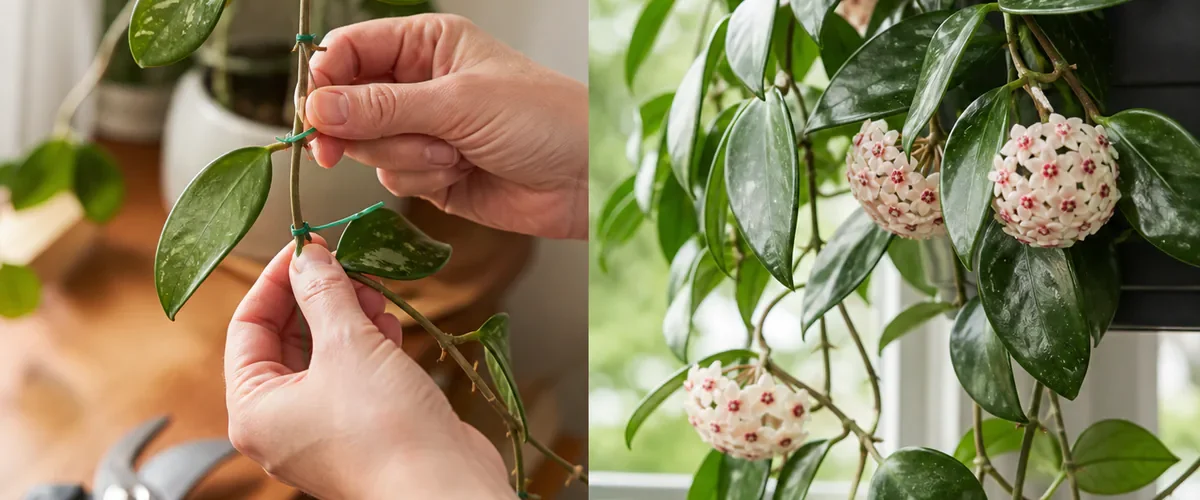
The smallest stem on a hoya may carry the biggest surprise. It looks like a short bare twig after the flowers fall, so tidy gardeners often reach for scissors. Leave it. That tiny peduncle can bloom again and again.
Protecting old flower spurs is only the beginning. The plant must also receive strong filtered light, a healthy wet-dry rhythm, and steady conditions while buds form.
Identify the Spur Before You Shape the Vine
Hoya peduncles are short, persistent stalks from which flower clusters grow. They may appear woody and inactive between blooms. A living spur should remain attached unless it is damaged or dead.
Trace every vine before pruning. Remove dead growth with clean scissors and shorten an unruly stem only when necessary. Do not cut every leafless section; some hoyas send long searching vines before leaves fill in.
Move the Plant Into Blooming Light
Many common hoyas need bright indirect light and may enjoy mild morning or late-day sun. A dim shelf supports survival but can delay flowers for years.
Increase light gradually to prevent scorched leaves. Variegated forms may need a brighter safe position because white or cream areas cannot photosynthesize. Turn the plant for even growth before buds develop, then keep its orientation steady.
Water the Thick Leaves Correctly
Fleshy hoya leaves store some moisture. Let the mix partly dry, then water thoroughly and drain the pot. Do not water by a fixed weekly schedule.
Constant wetness leads to soft roots and yellow leaves. Severe repeated drought can stop growth and make buds drop. Check deeper than the surface and learn the difference between the pot’s wet and dry weight.
Use an Airy Pot and Modest Size
Plant in a chunky, fast-draining houseplant mix and a container with open holes. Hoyas often flower while comfortably snug, but roots do not need to be crushed into a solid mass.
Repot when mix breaks down, roots circle heavily, or watering becomes difficult. Move up one size. A large volume of unused wet mix can rot a small root system.
Keep Budding Conditions Stable
A hoya carrying buds may drop them after sudden heat, cold drafts, severe dryness, saturation, or a major location change. Keep it away from air conditioning and heating vents.
Support climbing vines gently on a trellis or let them trail. Do not twist stiff stems into a new shape. If the plant must move, preserve its angle to the light as much as practical.
Feed the Roots, Not the Flower Count
Use a complete fertilizer at the labeled rate during active growth. Excess nitrogen can encourage long vines without solving a light problem. Heavy phosphorus does not guarantee hundreds of flowers.
Apply food to moist mix and flush the pot occasionally with plain water. Reduce or pause feeding in a cool dark season.
Respect Maturity and Species
A new cutting may need several years to build enough roots and vines for flowering. Hoya species and cultivars differ in bloom timing and environmental needs. Identify yours and compare it with plants of similar age.
Keep a simple record of light, watering, and the first buds. Once a cluster succeeds, those notes help you repeat the conditions.
Do Not Confuse Propagation With Bloom Care
Cutting a healthy vine can make a new hoya, but it removes leaves and nodes from the flowering plant. Propagate during active growth only when the parent is vigorous. Take a clean cutting with several nodes, root it in a suitable airy medium, and expect the young plant to focus on roots before flowers. Do not sacrifice every mature vine for cuttings if blooms are the goal. A larger established framework carries more potential peduncles.
Use Temperature as a Stability Check
Most household hoyas prefer comfortable warmth without sharp swings. A chilly night beside glass followed by hot daytime sun can stress buds. Use a simple thermometer near the plant rather than relying on the room thermostat across the house. If temperatures become extreme, adjust a curtain or move the plant slightly before buds form. Once clusters are developing, make changes slowly and preserve the plant’s light direction.
Protect Peduncles From Pests
Mealybugs and scale hide at nodes and around flower spurs. Inspect sticky residue and cottony material closely. Isolate an affected plant and use a product labeled for indoor ornamentals.
Avoid heavy homemade oil sprays that may burn leaves or coat developing buds. Treat the identified pest at the correct interval.
Hundreds of Flowers Begin With One Saved Spur
A large mature hoya may eventually carry many clusters, but the number depends on variety, age, and conditions. Your first goal is one healthy peduncle reblooming.
Put down the scissors, brighten the safe light, water by need, and keep the plant steady. When a ring of tiny buds returns to that plain little stalk, its value becomes impossible to miss.


