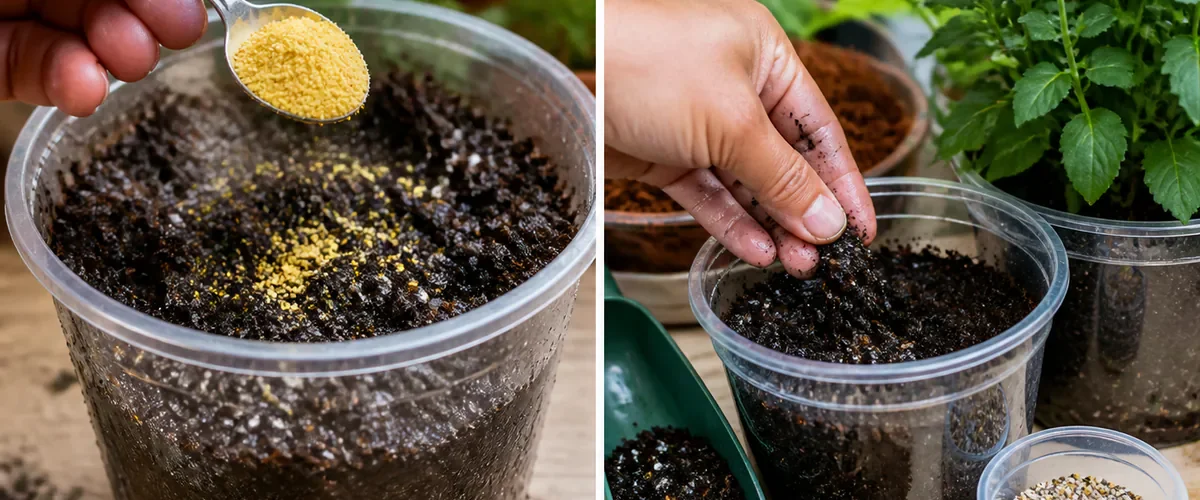
The yellow powder looks harmless until water touches it. Then crushed mustard releases sharp-smelling compounds made by the seed’s natural defense system. That reaction explains why mustard products are studied for soil and pest management. It also explains why dumping a spoonful into a small flowerpot can be risky.
Mustard powder is not a miracle fertilizer for every plant. The result depends on dose, product, soil, and plant sensitivity, and the wrong combination can injure roots instead of reviving them.
What Begins After Mustard Gets Wet
Mustard tissues contain glucosinolates and enzymes kept in separate parts of the cells. Crushing and moisture allow them to interact, producing compounds including isothiocyanates. These can affect insects, microbes, weeds, and plant roots.
Agricultural mustard seed meals may be used in managed systems with known rates and waiting periods. Culinary powder has no flowerpot directions. A tablespoon in a small pot may create a far stronger local exposure than the same amount spread through a garden bed.
Why One Spoon Cannot Fit Every Pot
A four-inch seedling pot and a large patio planter contain very different amounts of soil. Orchids, succulents, petunias, herbs, and citrus also have different root chemistry and nutrient needs.
The existing mix may already contain controlled-release fertilizer. Adding mustard and another feed can stack inputs that are invisible from the surface. Check the potting-mix bag or nursery tag before assuming the plant has received nothing.
Sprinkling the same amount everywhere ignores plant size, soil moisture, growth stage, and existing fertilizer. Tender new roots and germinating seeds can be especially vulnerable.
Diagnose the “Lifeless” Plant
Touch the soil and lift the pot. A very light pot and dry mix suggest thirst. A heavy pot with yellow leaves may be staying wet. Check drainage holes, look for circling roots, and inspect leaf undersides.
Move the plant only after comparing its light needs with the location. Some wilt in hot afternoon sun; others stretch and stop flowering in deep shade. No powder corrects the wrong light.
Use Water as the First Test
If a healthy-rooted plant is truly dry, water it slowly until the mix is evenly moist and extra water drains. Empty the saucer. Leaves may lift within hours, creating the “instant revival” often credited to whatever powder was added at the same time.
If the soil repels water, soak the pot carefully and refresh the mix when appropriate. Do not keep pouring water around a dry central root ball while it runs down gaps at the sides.
Feed With a Measured Product
Choose a fertilizer labeled for containers and the plant type. Its analysis tells you how much nitrogen, phosphorus, and potassium it supplies. Follow the dose for the actual pot size.
Feed during active growth and usually onto moist roots. A plant with root rot should be repaired and repotted before fertilizing. Heavy doses cannot replace missing roots and may burn the survivors.
Mustard Is Not a Universal Pest Control
Claims often name ants, slugs, soil insects, and plant diseases together. These problems need different responses. Ants may be following honeydew from aphids. Fungus gnats breed in moist organic material. Slugs shelter in damp debris and feed at night.
Identify the organism first. Use sanitation, moisture management, barriers, beneficial insects, or a labeled control suited to the pest. A harsh soil reaction may hurt useful organisms while missing pests on leaves.
If You Use Horticultural Mustard Meal
Select a product sold for garden use and follow its label exactly. Some products must be incorporated, watered, or left for a period before planting. Wear any required protection and avoid breathing dust.
Do not assume mustard cake, seed meal, dry mustard, and prepared table mustard are interchangeable. Prepared mustard may contain salt, vinegar, sweetener, and other ingredients that do not belong in a pot.
Test One Plant, Not the Entire Balcony
If you experiment with any amendment, begin on one inexpensive healthy plant. Record the material, exact amount, pot volume, and date. Compare it with an untreated similar plant.
Watch for wilting, leaf-edge burn, mold, odor, soil crust, and stalled growth. New healthy leaves over several weeks are more meaningful than a temporary lift after watering.
Avoid the Ingredient Pileup
Mustard plus coffee grounds, eggshells, Epsom salt, banana water, and commercial fertilizer becomes an uncontrolled soil experiment. Organic matter can rot, salts can build, and nutrient balance can shift.
Use one tested product for one clear reason. Keep gardening materials labeled and away from food, children, and pets.
The Powerful Reaction Deserves Respect
Mustard is interesting precisely because it is biologically active. That power does not make a spoonful safe for every flowerpot.
After watering, the powder can affect more than the pest you hoped to stop. Diagnose first, measure plant food, and reserve mustard amendments for labeled horticultural use. A living root system needs precision more than surprise.


