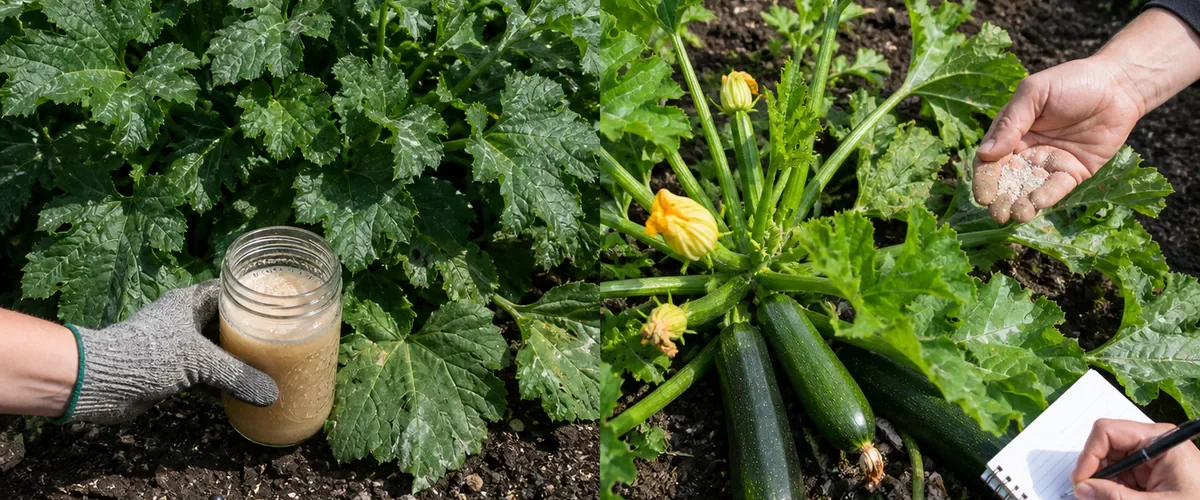
The zucchini looked spectacular from the garden gate. Leaves spread nearly a meter wide and the stems were thick. Under that green roof, however, there were only two fruit. The plant had been fed generously, but the feeding had built leaves instead of the harvest everyone expected.
Choosing the right fertilizer for zucchini plants means matching nutrients to tested soil and the stage of growth. Viral manure, iodine, ash, and yeast recipes do not deserve equal trust. Some can help under specific conditions; others add risk without complete nutrition.
Read the Plant Before Adding Another Feed
Large dark leaves with few flowers may point to excess nitrogen. Pale growth can come from low nutrients, but also from wet roots, cold soil, high pH, disease, or damaged roots. Tiny fruit that yellows behind the flower often signals poor pollination rather than hunger.
Look at the entire plant, recent weather, watering, and flower activity. Adding fertilizer to every symptom can make diagnosis harder.
Start With Tested Soil and Finished Compost
A soil test reports pH and major nutrient levels. Follow the local laboratory’s amendment recommendations before planting. Mix suitable finished compost into the bed to support structure, drainage, water holding, and slow nutrient release.
Compost is not all the same. A mature product smells earthy and no longer resembles its ingredients. Fresh food scraps buried at the roots can attract pests and temporarily tie up nutrients.
Homemade Feed One: Manure Needs Maturity
Finished composted manure can be useful before planting. Fresh manure or poultry droppings may burn roots, carry pathogens, and supply more nitrogen than a fruiting plant needs. Food-safety intervals apply when raw manure is used near edible crops.
Do not make fresh manure tea for a plant already producing zucchini. Use a trusted composted product at its stated rate or follow local extension guidance.
Homemade Feed Two: Iodine Is the Wrong Shortcut
A recipe counting iodine drops feels precise, but it does not provide the nitrogen, phosphorus, potassium, and micronutrient balance zucchini uses. Household iodine strength varies, and excess can damage roots and soil life.
There is no reason to apply it as a routine crop feed. Correct a documented deficiency with a labeled product and professional guidance instead.
Homemade Feed Three: Ash Changes More Than Potassium
Clean wood ash contains potassium and calcium, yet it also raises pH and adds salts. On acidic, potassium-poor soil, a test-based amount may be useful. On alkaline or already fertile soil, ash can make nutrient problems worse.
Never use ash from painted, pressure-treated, glued, or manufactured wood. Avoid breathing dust, keep it off leaves, and never mix it with nitrogen fertilizer.
Homemade Feed Four: Yeast Water Looks Busier Than It Is
Yeast, sugar, and warm water foam dramatically. The bubbles show fermentation, not a complete plant-food analysis. Sugar can attract ants and flies, while every batch changes with time and temperature.
Put suitable kitchen scraps into a managed compost system. Keep sweet fermented drinks away from zucchini roots.
Side-Dress With a Product You Can Measure
Extension guidance may recommend a small nitrogen side-dressing when squash begins to spread. Rates depend on the fertilizer analysis and row length. Apply beside, not against, the stem and water it into the soil.
Container zucchini needs a complete fertilizer labeled for edible vegetables because nutrients leave through drainage. Follow the pot rate. A confined root system can burn quickly when the dose is doubled.
Track Flowers and Fruit for One Week
Count male flowers, female flowers, and developing fruit each morning for seven days. If many female flowers form but their tiny zucchini yellow after closing, pollination is the stronger suspect. If few flowers appear at all, review sun, temperature, plant age, and nitrogen.
Photograph the same crown rather than relying on memory. New leaves and flowers reveal the response to care; old yellow tissue may remain damaged even after the problem is corrected.
Keep Fertilizer Off the Crown
Place side-dressing in a shallow band beyond the stem, never on leaves or the central crown. Water normally after application and clean stray granules from foliage. Concentrated fertilizer beside tender stem tissue can burn the plant before roots use it.
Fix Pollination Before Blaming Fertility
Zucchini carries separate male and female flowers. The female has a tiny fruit at its base. Bees normally move pollen between them, but rain, heat, pesticide, or low pollinator activity can interrupt the visit.
In the morning, use a clean soft brush to transfer pollen from an open male flower to an open female flower. Avoid insecticide on blooms and plant other flowers nearby to support pollinators.
Build Fruit With Consistent Care
- Provide full sun and enough space for airflow.
- Water deeply at soil level when needed.
- Keep moisture steady while fruit expands.
- Harvest tender zucchini every day or two.
- Keep healthy leaves and remove only dead or diseased tissue.
The giant leaves were not proof that the feeding plan worked; they were the clue that it had leaned too heavily toward growth. Use composted material, a soil test, and a measured labeled fertilizer. Treat ash as a soil amendment, skip iodine and sugar yeast, and check pollination. The harvest grows when the whole system is balanced.


