A glass of water can sometimes turn one rose stem into a new plant. The first roots look almost too delicate to be real, and they are. Water-grown roots break easily, so the method succeeds through careful handling, not the aloe chunks or scented oils often added in videos.
Expect rooting to take weeks, not days. Flowers come much later, after the cutting has built roots, leaves, and enough stored energy. Starting with that realistic timeline makes every small sign of progress easier to understand.
Begin With the Right Rose Cutting
Choose a clean, healthy stem from a garden rose you are allowed to propagate. Growth that has recently finished flowering is often mature enough to root while still flexible. Avoid stems with black marks, mildew, insect damage, or soft discolored areas.
A bouquet stem can be tried, but it has lower odds. It may be old, chilled, dehydrated, or treated after cutting. Fresh material from a healthy local plant usually responds better. Protected varieties may have propagation restrictions, so check the plant label and local rules.
Make a Clean Six-Inch Cutting
Disinfect sharp pruners before cutting. Select a 6-to-8-inch section with at least three nodes. A node is the slight joint where a leaf grows. Cut the base just below one node and remove the flower or bud so energy is not spent trying to bloom.
Strip leaves from the lower half, but leave one or two small upper sets. Too many leaves lose water faster than a rootless stem can replace it. Too few can limit the energy available for growth.
How to Root a Rose in Water
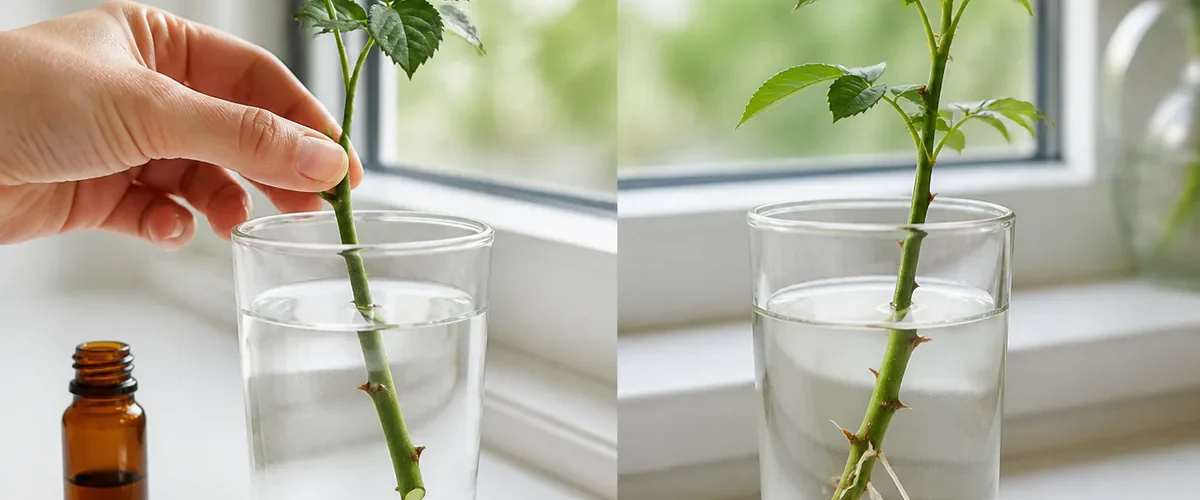
Use a clean glass and fresh room-temperature water. Submerge the lowest node while keeping every leaf above the surface. Set the glass where it receives bright, indirect light. Hot direct sun can warm the water and stress the cutting.
Replace the water every few days. Wash away any slippery film from the glass, and top up between changes when needed. If the lower stem becomes black, soft, or foul-smelling, it is rotting and should be discarded.
Wait for several useful roots
A bump or white callus is encouraging, but it is not a complete root system. Wait until several roots are about 1 to 2 inches long. Depending on the rose and conditions, this may take three to six weeks or considerably longer.
Move it to potting mix gently
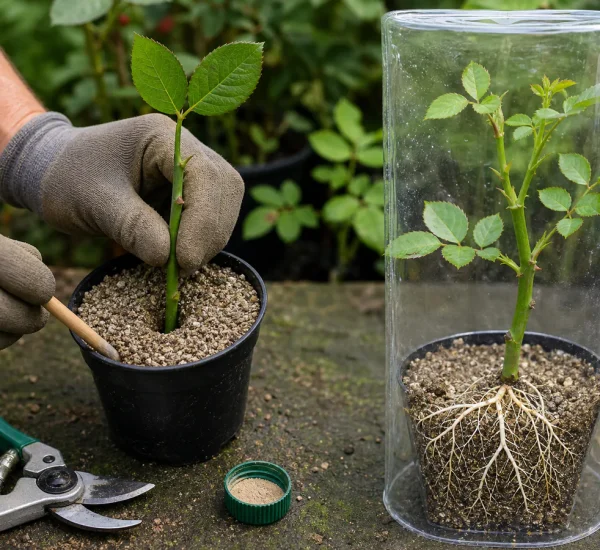
Fill a small draining pot with moist, fresh potting mix. Make a hole wide enough for the roots, lower them in without bending sharply, and close the mix gently. Keep the pot evenly moist and in indirect light while the water roots adjust.
A More Reliable Alternative: Rooting Mix
Many growers put rose cuttings directly into a sterile, airy rooting mix. Prepare a pot with drainage, moisten the medium, and make a hole with a pencil. Dip the stem in a labeled rooting hormone if desired, then insert at least one lower node.
A clear bag or dome can hold humidity, but it must not rest on leaves. Open it each day so stale moisture escapes. Keep the medium damp rather than saturated. This method produces roots already adapted to solid mix and may reduce transplant shock.
Why the Viral Additives Can Fail
A piece of aloe leaf is moist, but it is not sterile or airy. As the cut leaf breaks down, it can feed microorganisms around the wounded rose stem. Essential oils are concentrated plant chemicals and may injure cells instead of encouraging roots.
Plain water or clean rooting medium makes conditions easier to control. Commercial rooting hormone is optional. If you use it, pour a small amount into a separate container so the main package stays clean, and follow the label.
Do Not Mistake New Leaves for Roots
A cutting can open a bud using energy stored inside the stem. That early leaf does not prove the base has rooted. Continue providing humidity and indirect light. Do not pull a cutting from its mix every few days to check, because new roots tear easily.
In solid mix, gentle resistance and continued new growth after several weeks are better signs. In water, roots are visible. Either way, patience protects the progress you cannot rush.
Prevent Rot, Wilting, and Sunburn
Use clean tools and containers. Keep foliage out of standing water, remove fallen leaves, and avoid cold drafts or hot windows. Saturated mix starves roots of oxygen, while dry air pulls water from the leaves. Aim for moist, airy, and mild conditions.
After rooting, open a humidity cover gradually over several days. Increase light slowly. Wait for active growth before feeding, then use a mild fertilizer at the labeled rate.
When the Cutting Becomes a Rose
Move the rooted plant to a slightly larger pot only after roots hold its mix together. Harden it off before outdoor planting. During the first season, protect it from drought and severe heat while allowing drainage and air around the leaves.
The glass-of-water trick can work, but its real reveal is not instant flowers. It is the quiet day when the cutting begins growing from its own roots. That result takes longer than a viral promise and lasts much longer, too.