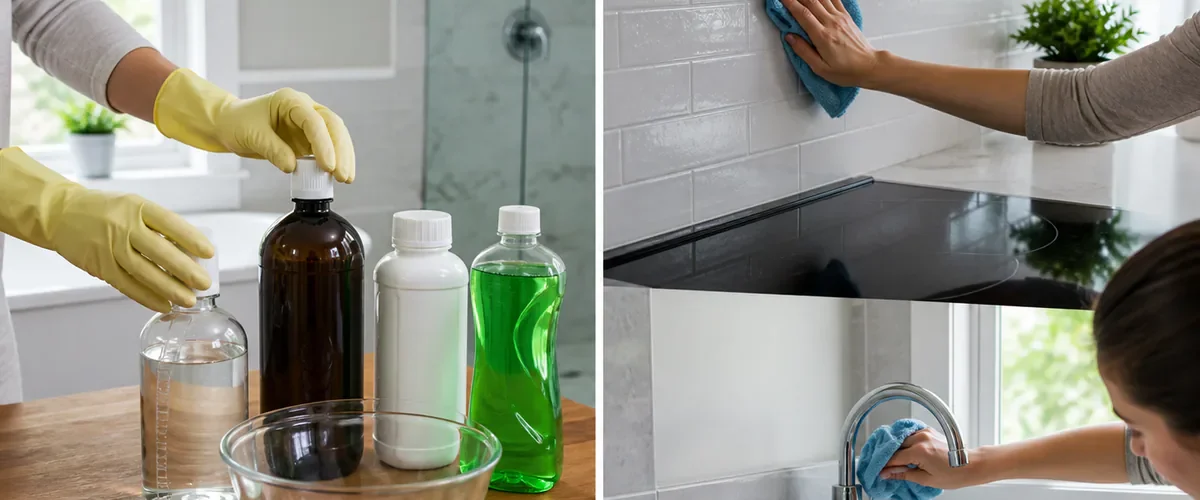
The homemade cleaner fizzed so hard that it looked unstoppable. Vinegar, peroxide, baking soda, and dish soap promised to remove bathroom scale and kitchen grease better than bleach. Then came the sharp smell and burning eyes.
That bottle combines ingredients that should not share a homemade recipe. Vinegar and hydrogen peroxide may form irritating peracetic acid. Vinegar and baking soda spend much of their power reacting with each other. Storing the mixture creates even more uncertainty.
The fix is simple: stop looking for one miracle bottle and give each kind of dirt the cleaner it responds to.
Grease Needs Soap and Movement
Fill a bowl with warm water and add only a few drops of dishwashing liquid. Dip a microfiber cloth and wring it until damp. Work across sealed kitchen surfaces in small sections.
Give greasy spots a second pass. Then wipe with a separate cloth dampened with plain water and dry. This removes both grime and soap film.
Do not use dish soap on a surface when the manufacturer recommends another cleaner. Natural stone, unsealed wood, painted cabinets, screens, and specialty appliance coatings all need care.
Mineral Scale Needs a Compatible Descaler
White crust on a faucet is often mineral scale. On acid-safe materials, plain white vinegar or a labeled citric-acid descaler can soften it. Acid can etch marble, limestone, travertine, some grout, and other sensitive finishes, so check first.
For a compatible chrome faucet, place a vinegar-damp cloth over the deposit for a short ten-minute test. Remove, wipe gently, rinse well, and dry. Stop if the finish changes.
Use a toilet-bowl descaler labeled for the fixture when deposits sit below the waterline. Follow its directions and do not add any other product.
Never Turn Separate Cleaners Into a Cocktail
Chlorine bleach must not be mixed with acids, ammonia, or other cleaners. Dangerous vapors can result. Disinfectants also should not be combined with soaps or homemade ingredients unless the label specifically says to do so.
Vinegar and peroxide belong in separate containers and separate tasks. Even using products one after another requires a thorough rinse and ventilation.
If you accidentally mix cleaners and develop coughing, burning eyes, trouble breathing, or dizziness, move to fresh air and contact local emergency or poison advice. Do not lean over the bucket to identify the smell.
Clean First, Disinfect Only When Needed
Routine soap-and-water cleaning removes visible dirt and lowers the number of germs. Many homes do not need daily disinfection of every surface.
When someone is ill or there is a specific contamination concern, choose one disinfectant registered for that use. Read the label for the surface, dose, protective equipment, contact time, ventilation, and rinsing.
A product works only when used as tested. Adding another cleaner can reduce effectiveness while increasing risk.
The Two-Product Cleaning Plan
On cleaning day, carry soapy water and two cloths for grease and general soil. Complete that job, rinse, and put the soap away. Later, take out one surface-safe descaler for the few mineral deposits that remain.
Keep toilet tools separate from kitchen tools. Color-coded cloths make this easier. Wash reusable cloths at the temperature and method on their care labels.
Store every chemical in its original bottle with the label intact. A reused water or soda bottle can lead to accidental drinking.
Why Bubbles Fool Us
Vinegar and baking soda release carbon dioxide gas, which creates exciting foam. The reaction can help move loose debris in some open containers, but the remaining liquid is less acidic and less alkaline than the starting ingredients.
A quiet cleaner may work better because it keeps the chemistry needed for the job. Dish soap surrounds grease. Acid dissolves certain mineral deposits. The visible show is not the measurement.
Surface Warnings That Prevent Expensive Damage
Test in a hidden place. Keep acid away from natural stone. Avoid abrasives on glossy plastic and coated fixtures. Never spray liquid into outlets, controls, or appliance seams.
Wear gloves and eye protection when labels call for them. Open a window or use exhaust ventilation. Keep children and pets outside the work area until surfaces are rinsed, dry, and safe.
What to Do With an Old Mystery Bottle
Do not sniff, taste, or test an unlabeled cleaner. Keep it closed and away from people and pets. Ask your local household-hazardous-waste program how to identify or dispose of it; rules differ by location.
Never pour mixed chemicals into a sink, toilet, street drain, or garden unless local authorities and the product label say it is permitted.
The Shine Comes After the Fizz Stops
The “better than bleach” bottle promises one dramatic answer to two different problems. The safer routine is less theatrical and more effective.
Use diluted dish soap for grease, one compatible descaler for mineral crust, and one labeled disinfectant only when needed. Rinse between jobs and never mix. Your home shines, and the air stays comfortable enough to enjoy it.


