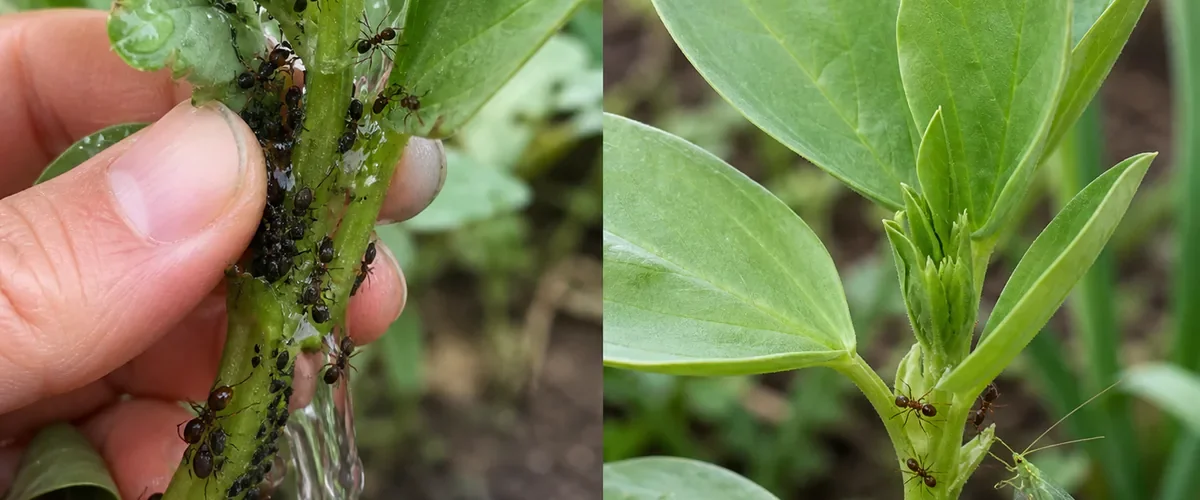
The aphids disappeared under a stream of water, but ants returned to the stem before sunset. Days later, fresh colonies covered the soft buds. The missing step was not a stronger spray. It was understanding the partnership that helps aphids return.
Why Ants Visit Aphid Colonies
Aphids feed on plant sap and release sweet honeydew. Some ants collect it, defend aphids from predators, and move them to tender growth. If ant traffic remains heavy, lady beetles and other helpful insects may struggle to control the colony.
Sticky leaves and dark sooty mold often appear beneath an infestation. Check leaf undersides and shoot tips. Aphids vary in color, so confirm identification before treatment.
Begin With Water and Scissors
Hold delicate stems and rinse both sides of leaves with a firm stream of water. Many dislodged aphids cannot return. Repeat after two or three days. Indoors, isolate the plant and wipe small clusters away with a damp cloth.
If one tip is packed with insects, prune it into a bag and seal it. Keep enough healthy foliage for recovery. Clean pruners before moving to another plant.
Trace the Ant Trail
Follow ants to the ground, a wall crack, or a branch bridge. Trim safe plant-to-structure contact where appropriate and seal indoor food entry points. Avoid damaging bark or cutting a branch that affects tree safety.
A labeled trunk barrier may interrupt climbing ants, but sticky compounds should never touch bark. Install the protective wrap exactly as directed. Enclosed bait can address a colony where permitted, but it must be secured from children, pets, and wildlife.
Choose a Tested Plant Treatment
When rinsing is not enough, insecticidal soap labeled for aphids and the affected plant is a focused option. Test a few leaves, apply in mild weather, and reach the insects directly. Repeat only at the label interval.
Horticultural oil can smother pests, but temperature, plant sensitivity, flowering, and recent sulfur use matter. Read every direction. Never assume a product is safe for an edible crop because it is sold near gardening supplies.
Skip the Spray That Makes People Cough
Recipes built from chili, garlic, onion, essential oils, dish liquid, alcohol, or vinegar can irritate skin and lungs. Their strength is unknown, and a concentrated batch may burn a plant. “Stronger than tear gas” is a warning, not proof of good pest control.
Do not mix household cleaners or pesticides. Never apply a broad spray to open flowers while pollinators are active. More burning sensation does not mean better results.
Let Helpful Insects Stay
Lady beetles, lacewing larvae, hoverfly larvae, and tiny wasps attack aphids. Learn their shapes before spraying. Grow small nectar-rich flowers, provide plant diversity, and avoid broad insecticides that remove both pests and predators.
A few aphids can support this food web without harming a vigorous plant. Treatment becomes important when colonies distort new growth, spread rapidly, or overwhelm a young or stressed plant.
Change the Growth Aphids Prefer
Overfeeding with nitrogen produces soft shoots. Use fertilizer only for a diagnosed need and follow the rate. Provide suitable light, drainage, and steady water so the plant can tolerate limited feeding.
Inspect nursery plants before bringing them home. Quarantine indoor additions for a short observation period. Look at new tips weekly, because a small colony is easier to remove than one hidden inside curled leaves.
A Repeatable Plan
Choose mild weather for soap or oil. Heat, drought, and strong sun increase leaf injury. Do not spray before rain or when wind can carry droplets to flowers, people, or neighboring property. Water a dry plant at the soil and let it recover before treatment.
After control, inspect twice a week for at least fourteen days. Look at the exact buds shown in your first photograph. A rebound may come from hidden aphids, new winged adults, or ants finding a different route. Adjust one step rather than applying several products together.
Photograph the first colony, rinse it, and mark the date. Recheck in three days. If ants remain, interrupt their route or use a secured labeled bait. If aphids continue growing, add one plant-labeled soap or oil treatment.
The result may feel like a miracle because the buds finally stay clean. Yet the method is ordinary: remove aphids, stop their guards, protect predators, and check again. That is stronger than a painful kitchen spray and much kinder to the garden.
Patience protects the helpful insects, too.
Know When to Ask for Help
A mature tree covered high above the ground is not a safe home-spraying project. Neither is an infestation spreading across a greenhouse or valuable collection. Contact a certified arborist, local extension service, or licensed pest professional. They can confirm the insect, judge whether treatment is necessary, and choose equipment that reaches the target without coating people, neighboring plants, or pollinator habitat.


